Reclaiming Youthful, Vibrant Skin at Grazia Skin Clinic
1. Introduction: The Science of Ageless Beauty
Skin aging is a multi-faceted process governed by both intrinsic factors (like genetics and hormonal shifts) and extrinsic factors (such as UV radiation, pollution, and lifestyle choices). At the absolute center of this process is a single, crucial structural protein: collagen.
Often referred to as the “scaffolding” of the skin, collagen is responsible for the firmness, elasticity, and structural integrity that characterize youth. As we age, our body’s natural production of this vital protein slows down dramatically, leading to the familiar signs of aging—fine lines, wrinkles, sagging skin, and a loss of radiance.
At Grazia Skin Clinic, we specialize in cutting-edge dermatological solutions designed to stop and reverse this decline. By leveraging advanced aesthetic technologies, we don’t just temporarily mask the signs of aging; we trigger your skin’s biological mechanisms to synthesize fresh, healthy collagen from within. This comprehensive guide explores everything you need to know about collagen, how it affects your skin, the advanced treatments we offer to restore it, and how you can maintain a luminous, youthful complexion for years to come.
Understanding the Dermal Matrix
To understand why collagen is so critical, it helps to look at the anatomy of the skin. The skin is divided into three primary layers:
- The Epidermis: The outermost protective barrier.
- The Dermis: The thick middle layer containing blood vessels, nerves, hair follicles, and the extracellular matrix (ECM).
- The Hypodermis: The deepest subcutaneous fat layer.
The dermis is where the magic happens. It is composed primarily of fibroblasts—specialized cells responsible for manufacturing collagen and elastin fibers. These fibers form a dense, interwoven mesh network suspended in a hydrating fluid rich in hyaluronic acid.
When this network is dense and intact, your skin looks plump, smooth, and resilient. When you press your finger against your cheek and it snaps right back into place, you are witnessing the structural power of healthy dermal collagen.
2. What is Collagen? Deep Dive into Types and Structure
Collagen is the most abundant protein in the human body, accounting for roughly 30% of our total protein mass and up to 80% of the dry weight of our skin. Derived from the Greek word “kolla” (meaning glue), collagen literally holds our tissues together.
From a biochemical standpoint, collagen is a complex macromolecule composed of amino acids—primarily glycine, proline, and hydroxyproline. These amino acids bind together to form long polypeptide chains. Three of these chains wrap tightly around one another in a unique, right-handed triple helix structure. These triple helices then assemble into microfibrils, which bundle together to form the incredibly strong collagen fibers that give the dermis its mechanical strength.
The Primary Types of Collagen in Skin
While scientists have identified at least 28 distinct types of collagen throughout the human body, the skin relies almost exclusively on three specific types:
| Collagen Type | Location & Percentage in Skin | Primary Function & Characteristics |
| Type I | ~80% to 85% of dermal collagen | The absolute powerhouse. It possesses immense tensile strength (gram for gram, it is stronger than steel). It forms the thick, dense fibers responsible for skin firmness and structural support. |
| Type III | ~10% to 15% of dermal collagen | Often called “youth collagen.” It consists of finer, more compliant fibers that provide elasticity and compliance. It is highly abundant in infant skin and during the initial stages of wound healing. |
| Type V | Traces (<5%) | Works alongside Type I and Type III to co-regulate fiber diameter and help organize the structural matrix. |
In youthful skin, a high ratio of Type III to Type I collagen ensures that the skin is not only firm but incredibly soft, supple, and elastic. As time moves forward, this ratio shifts unfavorably. Type III collagen is progressively replaced by the stiffer, less flexible Type I collagen, while overall collagen levels decline across the board.
3. Why We Lose Collagen: The Mechanics of Skin Aging
The depletion of dermal collagen is driven by a dual-front assault: Intrinsic Aging (the natural biological clock) and Extrinsic Aging (environmental and lifestyle damage). Understanding these mechanisms helps clarify why over-the-counter skincare products often fail, and why professional intervention at a clinic like Grazia Skin Clinic is necessary.
Intrinsic Aging: The Internal Clock
Beginning around the age of 20 to 25, the fibroblasts in our dermis slow down their production capacity. On average, we lose approximately 1% of our skin’s collagen every single year after early adulthood.
- Fibroblast Senescence: As cells age, they become less responsive to chemical signals that tell them to produce collagen. Fibroblasts also flatten out and lose their physical tension against the surrounding matrix, which further suppresses their synthetic activity.
- Hormonal Shifts: For women, this decline accelerates dramatically during menopause. In the first five years of menopause alone, the skin loses up to 30% of its total collagen content, leading to rapid skin thinning and sudden sagging.
Extrinsic Aging: The Environmental Assault
Extrinsic factors dramatically accelerate this baseline loss, breaking down existing collagen structures long before their time.
- Photoaging (UV Radiation): Solar ultraviolet radiation is the single largest culprit behind premature skin aging. UV rays penetrate deep into the dermis, generating massive quantities of Reactive Oxygen Species (ROS)—free radicals that damage cellular DNA. Crucially, UV exposure upregulates enzymes called Matrix Metalloproteinases (MMPs). These enzymes act like microscopic scissors, slicing through the delicate collagen matrix.
- Glycation (Advanced Glycation End-products – AGEs): When high levels of sugar enter the bloodstream, they bind molecules to proteins like collagen and elastin. This process creates stiff, brittle, cross-linked proteins known as AGEs. Glycated collagen loses its elasticity, fractures easily, and turns skin dull, sallow, and prone to deep wrinkling.
- Smoking & Pollution: Airborne pollutants and tobacco smoke introduce hundreds of toxins to the skin, constricting blood vessels, starving the dermis of oxygen, and directly dismantling the structural integrity of both collagen and elastin.
4. The Benefits of Restoring Collagen
Actively restoring your skin’s collagen reserves yields profound, systemic improvements to your appearance and skin health. When you undergo professional collagen-stimulating therapies at Grazia Skin Clinic, you can expect a comprehensive range of clinical benefits:
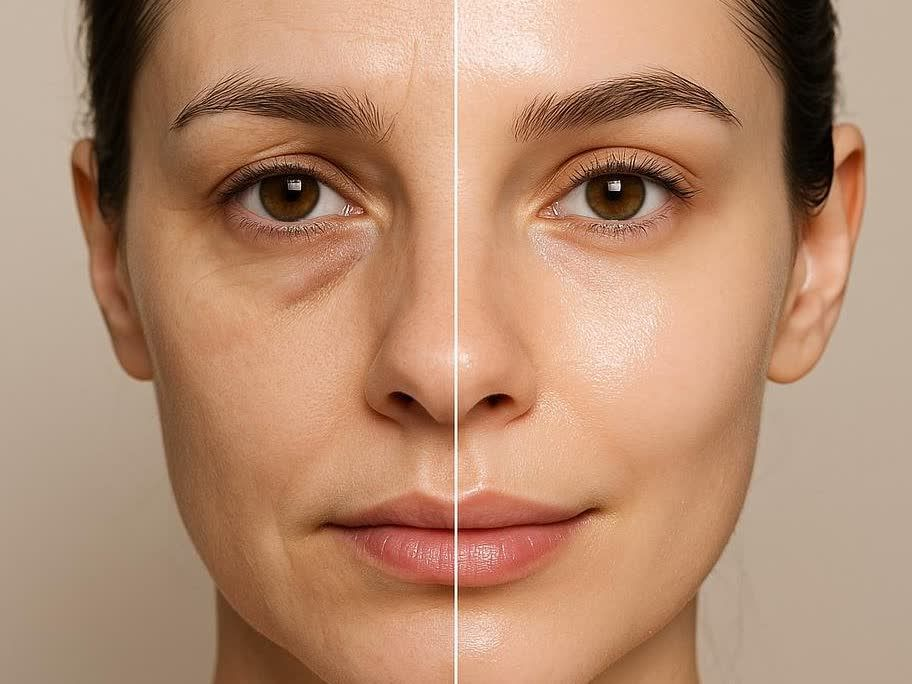
- Dramatic Reduction in Wrinkles and Fine Lines: By filling in the structural gaps within the dermal layer, the skin expands smoothly over its foundation. Crow’s feet, laugh lines, and forehead furrows are visibly plumped from the inside out.
- Restoration of Facial Volume and Contour: Sagging jawlines, hollow cheeks, and deflated undereye areas are re-contoured. Rebuilding the collagen matrix lifts sagging tissues, restoring a youthful “Triangle of Beauty” profile.
- Enhanced Skin Elasticity and Bounce: Replacing rigid, damaged fibers with fresh Type I and Type III collagen gives your skin back its natural elasticity, allowing it to snap back effortlessly against gravity and expression changes.
- Deep, Long-Term Hydration: Collagen fibers act as physical anchors for Hyaluronic Acid (HA) molecules. A dense collagen matrix holds onto significantly more moisture, translating into a plump, dewy, and naturally radiant complexion.
- Fading of Scars and Textural Imperfections: For clients suffering from acne scars or uneven texture, new collagen remodeling breaks down old, fibrous scar tissues and replaces them with a smooth, even architectural layer.
- Thicker, More Resilient Skin Barrier: Thinning skin bruises easily and is highly susceptible to environmental irritation. Restoring dermal density thickens your skin, improving its defensive barrier function against external stressors.
5. Advanced Collagen Treatments at Grazia Skin Clinic
Because topical skincare creams cannot penetrate deep enough into the dermis to generate new structural fibers, professional clinical treatments are required to achieve true rejuvenation.
At Grazia Skin Clinic, we use a curated selection of advanced, non-surgical technologies designed to trigger controlled healing responses, forcing your body to remodel its dermal framework.
A. Microneedling & Collagen Induction Therapy (CIT)
Microneedling relies on the biological principle of controlled micro-injury. Using a medical-grade device equipped with ultra-fine, sterile needles, we create thousands of microscopic punctures in the skin’s surface.
- The Mechanism: These micro-injuries trigger an immediate inflammatory healing cascade without damaging the outer epidermis. Fibroblasts migrate to the site, releasing growth factors that stimulate the rapid production of fresh Type III collagen, which eventually transitions into permanent Type I structural support.
- Ideal Candidates: Excellent for individuals looking to correct mild-to-moderate fine lines, large pores, hyperpigmentation, and shallow acne scars.
- What to Expect: A mild tingling sensation during the procedure (managed with a premium topical numbing cream). You will experience a warm, pink complexion immediately post-treatment, resembling a mild sunburn, which resolves within 24 to 48 hours.
B. Radiofrequency (RF) Skin Tightening
Radiofrequency energy uses heat to reshape the deep structural layers of the skin.
- The Mechanism: RF devices deliver focused, alternating electrical currents down into the dermis. This energy generates heat (precisely controlled between 40°C and 42°C). The thermal energy causes immediate contraction of existing, stretched-out collagen fibers—delivering an instant lifting effect. Concurrently, it sets off a long-term healing response that stimulates fibroblasts to build new collagen over the subsequent 3 to 6 months.
- Ideal Candidates: Perfect for clients experiencing mild to moderate laxity along the jawline, neck, submentum (double chin), and nasolabial folds.
- What to Expect: A comfortable, warm sensation, often compared to a hot stone massage. There is virtually zero downtime, making it a popular “lunchtime” procedure.
C. Fractional Laser Resurfacing
Fractional lasers deliver targeted laser beams into the skin, leaving columns of surrounding tissue completely untouched to accelerate recovery times.
- The Mechanism: The laser energy vaporizes micro-zones of the damaged dermis, instantly vaporizing aged, cross-linked collagen bundles and triggering deep cellular regeneration. This treatment delivers unparalleled improvements in deep wrinkle correction and structural tightening.
- Ideal Candidates: Tailored for clients with pronounced photo-aging, deep peri-oral wrinkles (smoker’s lines), and severe acne scar changes.
- What to Expect: The skin will remain red and display a characteristic “grid” pattern for a few days, followed by gentle flaking. The resulting skin texture is completely renewed, smooth, and noticeably firmer.
D. Injectable Collagen Biostimulators
Injectable biostimulators are advanced cosmetic injectables designed to prompt your body to grow its own structural support.
- The Mechanism: Unlike traditional hyaluronic acid fillers that simply catch water to add volume, biostimulators (such as Poly-L-Lactic Acid or Calcium Hydroxylapatite) are injected into the deep dermis or subdermal planes. As the carrier gel dissipates, the microscopic biostimulatory particles provoke a mild, localized tissue response. Fibroblasts wrap around these particles, weaving a rich new network of your own natural collagen.
- Ideal Candidates: Individuals seeking natural, gradual volumization for hollow temples, sunken cheeks, and severe jawline laxity without looking “over-filled.”
- What to Expect: The volumetric improvements appear gradually over a period of 2 to 4 months, providing an incredibly natural-looking and long-lasting rejuvenation that can persist for up to two years.
6. Comprehensive Pre-Treatment Protocol
Achieving optimal clinical outcomes begins long before you step into our treatment rooms. Preparing your skin protects its barrier and sets your fibroblasts up for maximum productivity.
- Avoid Intense Sun Exposure (14 Days Prior): Sunburned or highly UV-stressed skin is highly reactive and in a state of acute inflammation. Avoid tanning beds and direct, unprotected sun exposure. Apply a broad-spectrum SPF 30+ daily.
- Discontinue Retinoids and Exfoliants (5 to 7 Days Prior): Pause the use of prescription retinoids (Tretinoin), retinol, glycolic acid, salicylic acid, and active chemical scrubs to ensure your epidermal barrier is stable and intact.
- Manage Anti-Inflammatory Medication: If you are undergoing treatments involving injectables or microneedling, avoid blood thinners like aspirin, ibuprofen, fish oil, and vitamin E supplements for 5 to 7 days (with your physician’s approval) to minimize the risk of bruising.
- Stay Well Hydrated: Drink plenty of water in the days leading up to your session. Well-hydrated skin responds more predictably to energy-based devices like RF and lasers.
- Arrive with a Clean Slate: Come to your appointment with skin completely free of makeup, heavy creams, perfumes, and self-tanning products.
7. Essential Aftercare Guidelines
The success of any collagen treatment depends heavily on how you treat your skin during the critical 48-hour to 14-day recovery window. Proper aftercare protects your investment, minimizes down time, and maximizes new fiber synthesis.
The Immediate 48-Hour Window: Protect & Soothe
- Keep it Clean and Pure: Wash your face using only lukewarm water and a gentle, soap-free, non-comedogenic cleanser. Pat dry gently with a clean microfiber towel—never rub.
- No Active Ingredients: Strictly avoid applying products containing retinol, Vitamin C, AHAs, BHAs, or benzoyl peroxide. These will cause severe irritation and disrupt the controlled healing cascade.
- Avoid Heat and Sweat: Do not participate in strenuous workouts, hot yoga, steam rooms, saunas, or hot baths. Excess heat and sweat can increase swelling and introduce unwanted bacteria into vulnerable micro-channels.
Days 3 to 7: Rehydrate & Defend
- Apply Hyaluronic Acid: Keep the skin hydrated with pure hyaluronic acid serums and ceramide-rich barrier repair creams. This supplies the necessary moisture matrix that new collagen requires to organize its fibers.
- Strict Sun Protection: Your skin is highly susceptible to post-inflammatory hyperpigmentation (PIH). Apply a physical, mineral-based sunscreen (Zinc Oxide or Titanium Dioxide) with an SPF of 30 or higher every single morning, reapplying every two hours if outdoors.
- Do Not Pick or Scratch: If your treatment involves fractional lasers or deep microneedling, you may experience mild flaking or micro-crusting. Let this skin shed naturally. Picking at flakes can lead to scarring and uneven pigmentation.
8. Holistic Support: Nutrition, Supplements, and At-Home Care
While clinical procedures are the most effective way to jumpstart collagen production, maintaining those results requires ongoing daily support. Think of clinical treatments as the construction crew, and your daily lifestyle as the raw materials supply chain.
Dietary Building Blocks for Collagen Synthesis
Your body cannot manufacture collagen without the correct molecular building blocks. Ensure your diet contains ample amounts of:
- Vitamin C: The essential co-factor for collagen synthesis. Without adequate Vitamin C, the body cannot link the amino acids proline and lysine into the triple-helix structure, halting production. Include citrus fruits, bell peppers, strawberries, and leafy greens in your daily meals.
- Amino Acids (Proline, Glycine, and Lysine): Found abundantly in bone broths, lean grass-fed meats, poultry, wild-caught fish, eggs, and for plant-based diets, spirulina, legumes, and seeds.
- Zinc and Copper: Trace minerals that act as essential activators for the enzymes that manage collagen remodeling and repair. Found in oysters, pumpkin seeds, lentils, and dark chocolate.
The Role of Oral Collagen Supplements
Clinical studies suggest that high-quality hydrolyzed collagen peptides can pass through the digestive barrier and enter the bloodstream. Rather than directly incorporating into the skin, these fragments act as chemical signals that trick your body into believing massive collagen destruction has occurred, prompting fibroblasts to increase their natural production. For best results, select a sustainably sourced marine or bovine hydrolyzed peptide powder with a low molecular weight (under 5000 Daltons).
The At-Home Skincare Regime
Support your clinic results with a targeted topical routine:
9. Conclusion: Your Journey to Radiant Longevity
Aging is inevitable, but how you age is entirely within your control. The loss of dermal collagen is responsible for many of the visible changes we see in our skin over time, but modern aesthetic dermatology provides excellent solutions to address this concern.
By combining cutting-edge clinical therapies—such as Microneedling, Radiofrequency Skin Tightening, Fractional Lasers, and Injectable Biostimulators—with medical-grade home care and a healthy lifestyle, you can easily restore your skin’s underlying support structure.
At Grazia Skin Clinic, we understand that no two faces are identical. We invite you to schedule a comprehensive, personalized skin analysis with our expert medical team. We will design a customized, multi-modality collagen preservation plan tailored precisely to your unique anatomy, skin type, and beauty goals. Take the first step toward reclaiming a firmer, more radiant, and youthful version of yourself today.
10. Frequently Asked Questions (FAQ)
How long does it take to see results from collagen treatments?
While treatments like Radiofrequency offer an immediate temporary lift due to heat-induced fiber contraction, true biological collagen remodeling is a gradual process. You will begin to notice visible improvements in skin firmness, texture, and tone around 4 to 6 weeks post-treatment, with optimal structural improvements continuing to build for up to 3 to 6 months after your final session.
Are these procedures painful?
At Grazia Skin Clinic, your comfort is a top priority. For deeper treatments such as microneedling and fractional laser resurfacing, we apply a premium, medical-grade topical numbing cream prior to the procedure to minimize discomfort. Most clients describe the sensations as a mild tingling or a manageable scratching feeling. RF treatments are completely non-invasive and feel like a warm, soothing massage.
How many sessions will I need to achieve optimal results?
The total number of sessions depends on your current skin condition, age, and goals. For preventative care and mild texture issues, a series of 3 sessions spaced 4 weeks apart is highly effective. For deeper wrinkles, advanced skin laxity, or severe acne scarring, we typically recommend a series of 4 to 6 structured sessions, followed by semi-annual maintenance appointments to counter the natural aging process.
Can I get these treatments if I already have dermal fillers?
Yes, absolutely. However, correct timing and sequencing are essential. Energy-based treatments like deep fractional lasers or high-intensity RF should ideally be performed before receiving hyaluronic acid fillers, or delayed for at least 4 to 6 weeks after filler injections to prevent the heat from accelerating filler breakdown. Your practitioner will design a safe timeline during your initial consultation.