
1. Introduction: Understanding the Silent Burden of Fungal Infections
Fungal infections are among the most widespread yet deeply misunderstood dermatological conditions globally. Unlike superficial cosmetic issues, a fungal invasion of the skin, nails, or hair is a persistent biological battle. Fungi—including dermatophytes, yeasts, and molds—are opportunistic microorganisms. They thrive in warm, humid conditions, feeding on keratin, the structural protein that makes up your skin, hair, and nails.
For many individuals, what begins as a minor, negligible itch or a slightly discolored patch of skin rapidly escalates into an embarrassing, painful, and highly contagious chronic condition. The emotional toll of a visible fungal infection is often as severe as the physical discomfort. It affects personal confidence, dictates clothing choices, and restricts participation in daily activities like swimming, gym workouts, or even walking barefoot at home.
At Grazia Skin Clinic, we recognize that no two fungal infections are identical. Self-treatment with over-the-counter (OTC) creams or, worse, self-prescribed steroid-based formulations often leads to treatment-resistant fungal strains, temporary relief followed by severe rebounds, and damaged skin barriers. Our medical-grade, dermatologist-led clinical protocols are designed to target the infection at its biological root. By combining advanced diagnostics, targeted oral and topical medical therapies, state-of-the-art laser technology, and customized medical-grade skin care, we help you reclaim healthy, itch-free, and radiant skin.
2. Common Types of Fungal Infections We Treat
Fungi are incredibly diverse, and their manifestations on the human body vary extensively. To provide effective treatment, our board-certified dermatologists at Grazia Skin Clinic perform precise diagnostic examinations to identify the specific category of infection:
A. Tinea Corporis (Ringworm of the Body)
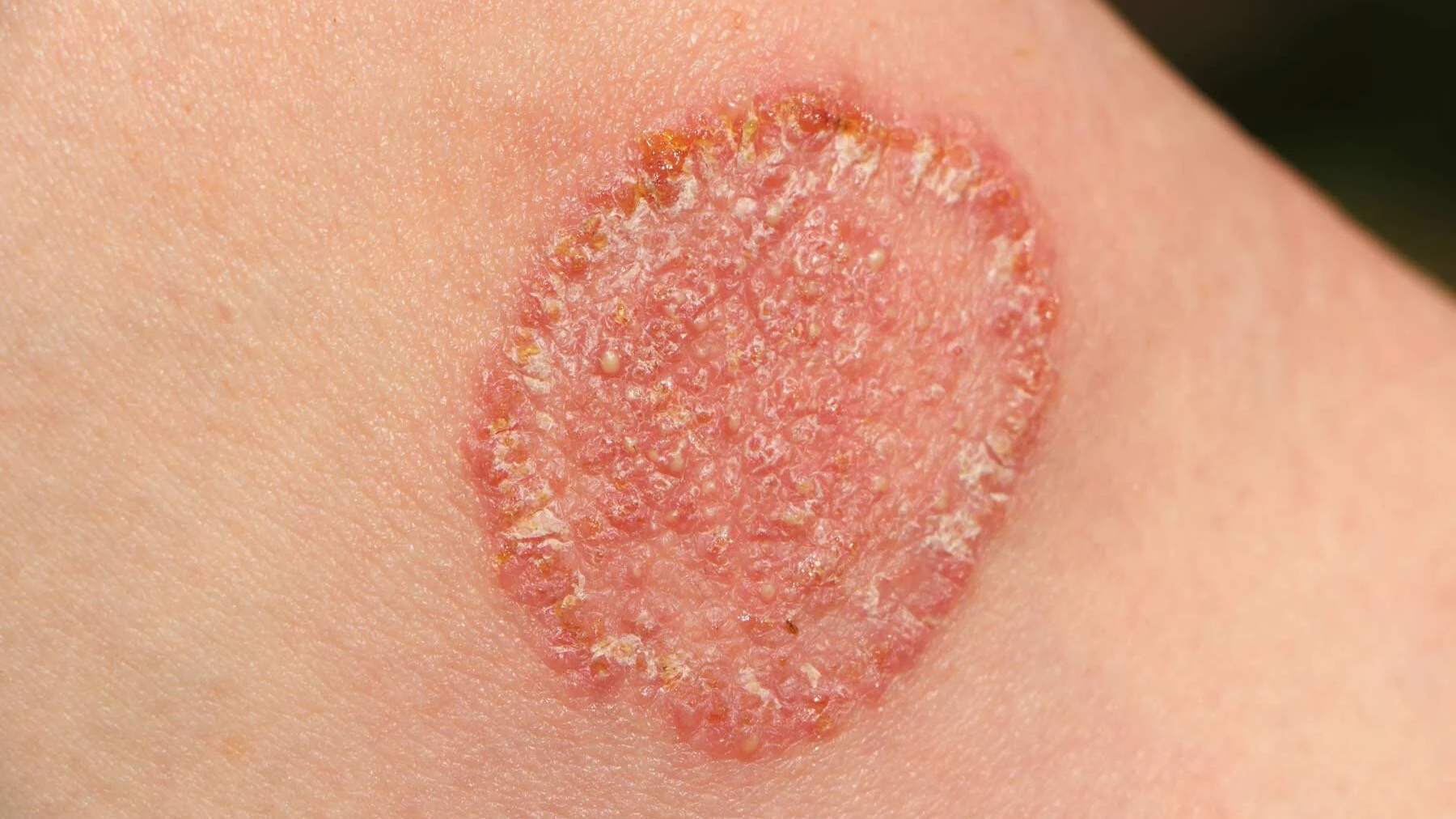
Despite its misleading name, ringworm has nothing to do with actual worms. It is a fungal infection caused by dermatophytes. It presents as circular, red, slightly raised patches with clearer skin in the center, mimicking a ring shape. These lesions are highly itchy, can scale, peel, and gradually expand outward if left untreated.
B. Tinea Cruris (Jock Itch)
Jock itch targets the warm, moist folds of the groin, inner thighs, and buttocks. It is particularly common among athletes, individuals who sweat heavily, or those wearing restrictive clothing. It manifests as a burning, highly itchy, red-brown rash that can flake, crack, or peel, causing severe physical discomfort during movement.
C. Tinea Pedis (Athlete’s Foot)
This highly contagious infection affects the skin on the feet, particularly between the toes. It can cause scaling, intense itching, painful cracking, redness, and even burning sensations. If left unmanaged, it can spread to the soles of the feet (moccasin-type tinea pedis) or lead to secondary bacterial infections due to open skin fissures.
D. Tinea Versicolor (Pityriasis Versicolor)
Caused by an overgrowth of Malassezia, a yeast naturally present on healthy skin, this condition causes small, flat, discolored patches. These spots can be lighter (hypopigmented) or darker (hyperpigmented) than your natural skin tone, often appearing on the chest, back, shoulders, and upper arms. They become more prominent after sun exposure because the yeast prevents the skin from tanning evenly.
E. Onychomycosis (Fungal Nail Infection)
A stubborn infection that penetrates the toenails or fingernails, causing them to become thickened, brittle, crumbly, distorted in shape, and discolored (yellow, brown, or white). Nail fungal infections are notoriously difficult to treat with topical solutions alone because the active ingredients struggle to penetrate the hard nail plate.
3. The Grazia Skin Clinic Treatment Philosophy
Our approach to fungal infection treatment goes beyond temporary symptom suppression. We utilize a multi-disciplinary, evidence-based methodology that prioritizes long-term eradication and skin barrier restoration.
       [ STEP 1: Advanced Clinical Diagnosis ]
                         │
                         ▼
     [ STEP 2: Custom Multi-Tiered Therapy ]
       ├── Target Oral & Topical Antifungals
       ├── Advanced Nd:YAG Laser (for Nails)
       └── Medical-Grade Skin Barrier Repair
                         │
                         ▼
     [ STEP 3: Complete Recurrence Prevention ]
By avoiding the dangerous pitfall of steroid-blended creams—which temporarily reduce inflammation while actually feeding the fungus and causing treatment resistance—our specialists ensure your skin heals safely and permanently.
4. Key Benefits of Seeking Treatment at Grazia Skin Clinic
Choosing specialized clinical care at Grazia Skin Clinic offers distinct advantages over self-medication:
- Accurate Differential Diagnosis: Many skin conditions, such as eczema, psoriasis, or seborrheic dermatitis, mimic fungal infections. Our dermatologists accurately diagnose your exact condition to prevent ineffective treatments.
- Advanced Medical Technology: We utilize cutting-edge Nd:YAG laser systems specifically calibrated to destroy deep-seated nail fungi without damaging surrounding tissue.
- Customized Prescriptions: We formulate customized medical regimens that match your systemic health, lifestyle, and the severity of the infection.
- Preventing Treatment Resistance: We closely monitor your progress to prevent the development of highly resistant fungal strains, which are common when OTC treatments are used incorrectly.
- Rapid Symptom Relief: Our medical therapies are designed to eliminate intense itching, redness, and scaling quickly, restoring your comfort from day one.
5. What to Expect During Your Treatment Journey
When you visit Grazia Skin Clinic, your recovery is mapped out through a structured, clinical process:
Phase 1: Comprehensive Consultation & Assessment
Your dermatologist will evaluate your medical history, inspect the affected areas under specialized dermascope tools, and, if necessary, perform a minor skin scraping or nail clipping for microscopic analysis (KOH mount) to identify the exact fungal species.
Phase 2: Customized Treatment Plan Formulation
Based on the diagnostic findings, we design a targeted treatment regimen. This may include a combination of high-potency topical antifungals, systemic oral medications, and advanced clinical therapies like laser nail treatments.
Phase 3: Monitored Healing & Adjustments
Fungal infections require consistent, targeted therapy. We schedule regular follow-up evaluations to track your progress, monitor systemic health if oral medications are prescribed, and adjust your treatment plan as the infection clears.
6. Comprehensive Fungal Treatment Modalities
| Treatment Type | Target Infection | Action Mechanism | Key Advantage |
| Topical Antifungals | Ringworm, Jock Itch, Athlete’s Foot, Tinea Versicolor | Creams, gels, or powders that disrupt fungal cell membranes directly on the skin surface. | Highly localized, minimal side effects, repairs skin barrier. |
| Systemic Oral Therapy | Severe, widespread infections; Onychomycosis | Prescription pills that eliminate fungi from within the bloodstream. | Reaches deep tissues and nail beds where topicals cannot penetrate. |
| Nd:YAG Laser Therapy | Stubborn Nail Fungus (Onychomycosis) | High-intensity light energy penetrates the nail plate to thermally destroy fungal spores. | Painless, highly targeted, drug-free alternative with zero systemic side effects. |
| Keratolytic & Barrier Repair | Scaly, thickened, or cracked skin | Formulations with urea or salicylic acid combined with ceramides. | Softens thickened skin to allow better antifungal absorption and restores the skin barrier. |
7. Crucial Post-Treatment Aftercare & Prevention
The key to permanently overcoming fungal infections lies in your daily routine. Because fungal spores can survive in your environment and on your personal items, following a strict hygiene protocol is essential to prevent re-infection:
- Keep the Area Clean and Dry: Fungi thrive in moisture. Always dry your skin thoroughly after showering, paying close attention to skin folds, underarms, groin, and between the toes.
- Separate and Sanitize Laundry: Wash your towels, bed sheets, and underwear in hot water (at least 60°C) and dry them in direct sunlight or a high-heat dryer to kill lingering spores.
- Avoid Barefoot Exposure: Never walk barefoot in communal areas such as gym locker rooms, public showers, swimming pools, or carpeted hotel rooms. Always wear protective footwear like flip-flops.
- Do Not Share Personal Items: Keep your towels, clothes, combs, nail clippers, and footwear strictly personal to prevent spreading the infection to family members.
- Discard or Treat Old Footwear: If treating athlete’s foot or nail fungus, sanitize your shoes with antifungal sprays or powders. Discard old, worn-out footwear that may harbor deep-seated fungal spores.
- Complete the Full Medication Course: Never stop your treatment early just because the visible rash or itching has cleared. Fungal spores can linger invisibly; stopping early is the leading cause of chronic recurrence.
8. Conclusion: Reclaim Healthy, Itch-Free Skin
Fungal infections are persistent, but they are entirely treatable with the right clinical expertise. Relying on temporary over-the-counter fixes or ignoring the symptoms only allows the infection to dig deeper, damage your skin barrier, and spread to loved ones.
At Grazia Skin Clinic, we provide the advanced diagnostics, specialized medical treatments, and ongoing support you need to completely eradicate fungal infections and restore your skin’s health. Do not let persistent itching and embarrassing rashes hold you back any longer. Contact Grazia Skin Clinic today to schedule your comprehensive dermatological consultation and take your first step toward clear, healthy skin.
REFERENCE:-
https://my.clevelandclinic.org/health/diseases/24401-fungal-infections-mycosis
https://pmc.ncbi.nlm.nih.gov/articles/PMC3103258
https://www.cdc.gov/fungal/about/types-of-fungal-diseases.html