
Introduction: The Biological Clock of the Follicle
Hair color is one of the most defining aspects of our identity, often associated with youth and vitality. When silver strands appear decades ahead of schedule, it is more than a cosmetic concern—it is a signal from the hair follicle’s “pigment factory.” Premature Greying of Hair (PGH), or canities, occurs when the melanocytes (the cells responsible for producing melanin) at the base of the hair follicle slow down or cease production entirely.
At Grazia Skin Clinics, we view premature greying through a lens of cellular health. In the Indian context, greying is considered “premature” if it begins before the age of 25. While genetics play a leading role, environmental stressors, oxidative damage, and nutritional gaps are the modern catalysts that accelerate this process. Understanding the transition from pigment to silver is the first step in formulating a strategy to preserve your hair’s natural hue.
Symptoms: Beyond the Silver Strand
The signs of premature greying often begin subtly and progress in patterns that reflect the underlying cause.
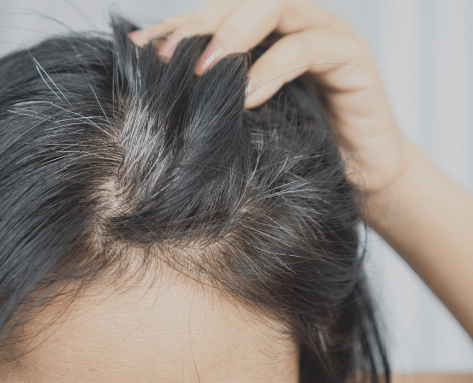
- Scattered “Salt and Pepper” Strands: Initially appearing at the temples or the crown, these single white hairs often have a different, coarser texture than pigmented hair.
- Loss of Luster: Before turning white, hair may appear dull, “washed out,” or yellowish as the melanin concentration begins to dip.
- Textural Changes: As the follicle loses pigment, it also loses certain protective lipids, making grey hair feel wiry, dry, and more prone to frizz.
- Rapid Progression: A sudden “explosion” of grey hair over a period of 6 to 12 months, often coinciding with high-stress life events or illness.
Types and Causes of Canities
To treat greying effectively, clinicians must categorize the type based on the driving force behind the pigment loss.
| Type | Primary Driver | Clinical Context |
| Genetic Canities | DNA & Family History | The most common form; dictated by the IRF4 gene. |
| Oxidative Stress | Free Radicals | Caused by UV rays, pollution, and smoking, which “bleach” hair from the inside. |
| Nutritional Canities | Deficiency | Lack of Vitamin B12, Iron, Copper, or Ferritin. |
| Medical/Autoimmune | Systemic Health | Often linked to Thyroid disorders or Vitiligo. |
Treatment: The Multidimensional Restoration Strategy
At Grazia Skin Clinics, we move beyond “covering up” greys. Our clinical approach focuses on follicular resuscitation.
1. Nutritional Repletion
The hair follicle is one of the most metabolically active parts of the body. Treatment begins with correcting the internal chemistry:
- Calcium Pantothenate (B5): Often called the “anti-grey” vitamin, it helps in the production of melanin.
- Para-Aminobenzoic Acid (PABA): Studies suggest that high-dose PABA can occasionally restore pigment in cases caused by deficiency.
- Trace Minerals: Supplementing with Copper and Zinc to support the tyrosinase enzyme, which is essential for pigment synthesis.
2. Topical Stimulants
Medical-grade serums containing Melitane (a biomimetic peptide) are used to stimulate melanogenesis. These topicals mimic the action of the alpha-melanocyte-stimulating hormone, encouraging the follicle to produce more pigment before the strand exits the scalp.
3. Low-Level Laser Therapy (LLLT)
In cases where greying is accompanied by thinning, LLLT can increase mitochondrial activity in the hair bulb. By improving blood flow and cellular energy, the follicle has a better chance of maintaining pigment production for longer cycles.
4. Oxidative Neutralization
Since hydrogen peroxide naturally builds up in the hair follicle (effectively bleaching it from the inside out), we utilize antioxidants like Catalase and Superoxide Dismutase to neutralize these free radicals and protect existing melanocytes.
Aftercare: Preserving the Pigment
Success in treating premature greying depends heavily on lifestyle modifications to prevent further “burnout” of the pigment cells.
- Sun Protection for Hair: UV radiation degrades the hair protein and pigment. Use hair sunscreens or hats when outdoors for extended periods.
- Stress Mitigation: High cortisol levels are known to deplete the melanocyte stem cells. Incorporating adaptogens and stress-reduction techniques is clinically relevant for hair health.
- Chemical Mindfulness: Avoid harsh ammonia-based dyes early on, as these can further damage the follicle. Opt for organic-based pigments or clinical camouflage if necessary.
- Scalp Hygiene: A clean, oxygenated scalp environment ensures that topical treatments can penetrate deep into the hair bulb.
Conclusion
Premature greying is a complex interplay of internal biology and external pressure. While we cannot rewrite your genetic code, modern dermatology offers powerful tools to slow the clock and, in many nutritional cases, reverse the silvering process. At Grazia Skin Clinics, our goal is to empower you with a protocol that nourishes your hair from the root, ensuring your strands stay as vibrant as your lifestyle. Your hair’s color is its crowning glory—let’s work together to keep it that way.