Introduction: The Pathophysiology of Neuromodulatory Action and Myofascial Aging
Skin aging involves more than just superficial dehydration or loss of surface-level skin elasticity. Underneath the epidermis and dermis lies a complex network of dynamic facial muscles. Every single day, these muscles contract thousands of times to produce facial expressions, such as smiling, frowning, squinting, and laughing. Undeniably, this constant muscle movement folds the overlying skin, eventually transforming soft dynamic lines into deep, permanent static wrinkles.
To address this issue effectively, we at Grazia Skin Clinics approach Botox Treatment (utilizing highly purified Botulinum Toxin Type A) as a precise molecular intervention. To understand this treatment through a medical lens, one must examine how the biological machinery operates at the neuromuscular junction (NMJ).
When a nerve signal commands a muscle to contract, it releases a chemical messenger called acetylcholine ($ACh$) into the synaptic cleft. For this release to happen, a group of proteins known as the SNARE complex must dock and fuse acetylcholine-carrying vesicles with the nerve cell membrane. The Botulinum Toxin molecule—specifically a core protein comprising a heavy chain and a light chain—intervenes directly in this process.
- Binding: The heavy chain of the toxin binds with extremely high affinity to specific receptors on the surface of the pre-synaptic motor nerve ending.
- Internalization: The nerve cell absorbs the toxin through a process called receptor-mediated endocytosis.
- Translocation & Cleavage: The active light chain of the toxin enters the cytoplasm of the nerve terminal, where it cleaves the SNAP-25 protein, a vital component of the SNARE complex.
Consequently, because the cleaved SNAP-25 protein can no longer assist with vesicle docking, the nerve cell cannot release acetylcholine into the synaptic cleft. By doing so, the toxin effectively blocks the chemical signal, preventing the muscle from contracting. The muscle relaxes, which instantly relieves the tension on the overlying skin. Furthermore, this localized relaxation isolates the targeted hyperactive muscle while simultaneously keeping your surrounding facial expressions natural, soft, and balanced. Ultimately, this cellular-level relaxation allows the skin surface to rebuild and smooth itself, concluding in a beautifully refreshed and youthful appearance.
Clinical Muscle Mapping: Precision Target Zones
Achieving flawless results with Botox requires deep anatomical expertise. Our clinical dermatologists map out your facial muscles with extreme precision to customize your dose and preserve your natural, warm expressions.
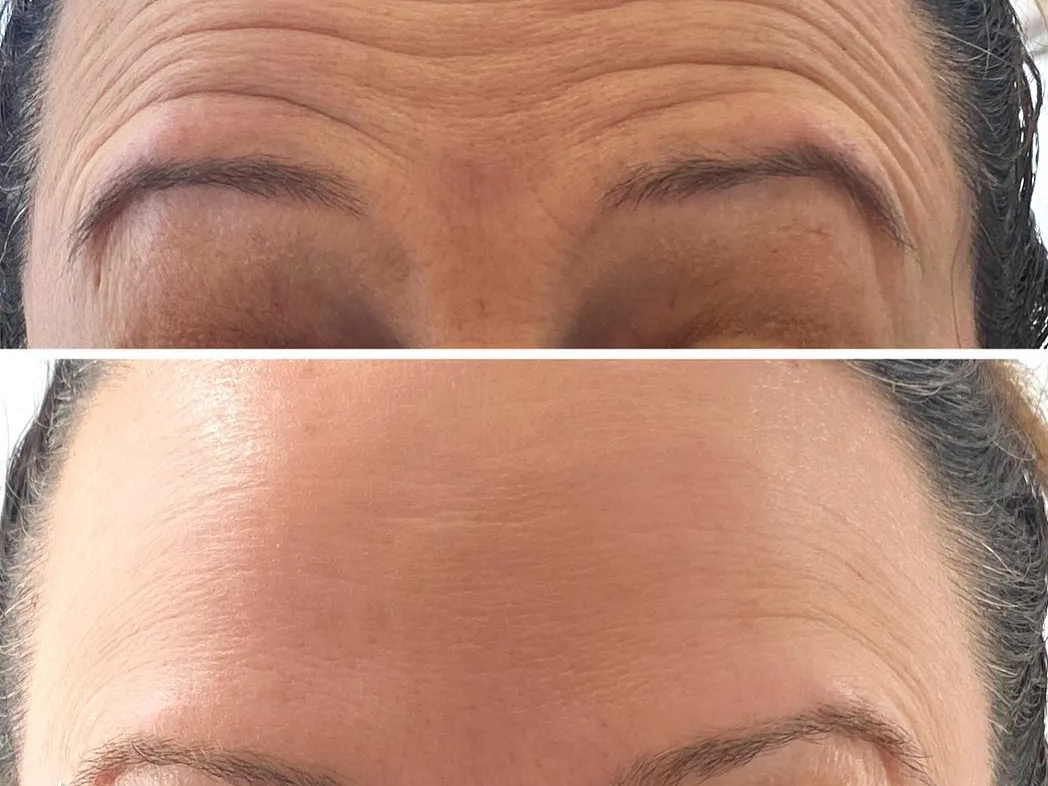
1. The Frontalis Muscle (Forehead Lines)
The frontalis is the broad muscle across your forehead that elevates your eyebrows. Contracting this muscle creates horizontal forehead creases.
- Our Target Strategy: We inject microscopic quantities of the toxin into multiple strategic points across the forehead. We balance the dosage carefully to smooth out the creases while keeping enough muscle movement to prevent your eyebrows from dropping or looking frozen.
2. The Glabellar Complex (The Frown Lines / The “11” Lines)
This complex consists of three key muscles: the single, vertical Procerus muscle and the two lateral Corrugator Supercilii muscles. When you frown or concentrate, these muscles pull your eyebrows downward and inward.
- Our Target Strategy: We target this zone to soften deep vertical lines. Relaxing these muscles opens up your eyes, instantly making you look happier, more approachable, and fully rested.
3. The Orbicularis Oculi (Crow’s Feet)
This circular sphincter muscle wraps tightly around your eyes. It contracts when you smile, laugh, or squint, forming fine lines at the outer corners of the eyes.
- Our Target Strategy: We deliver micro-injections into the lateral borders of the muscle. This relaxes the outer fibers, smoothing away fine smile lines while fully preserving the natural, warm expression of your eyes.
4. The Masseter Muscle (Jaw Slimming & Teeth Grinding)
The masseter is the powerful muscle responsible for chewing. When overactive, it can grow larger (hypertrophy), widening your jawline and causing severe teeth grinding (bruxism) or TMJ pain.
- Our Target Strategy: We inject the toxin directly into the deep belly of the masseter muscle. This relaxes the muscle fibers, reducing jaw tension and gradually slimming your lower face into an elegant, soft V-shape profile.
Comparison of Facial Neuromodulation Zones
| Target Muscle | Primary Action | Aesthetic / Medical Concern |
|---|---|---|
| Frontalis | Elevates eyebrows | Horizontal forehead lines |
| Glabellar Complex | Pulls eyebrows down & in | Vertical “11” frown lines |
| Orbicularis Oculi | Closes and squints eyes | Lateral squint lines (Crow’s feet) |
| Masseter | Closes jaw (chewing) | Jaw bulk, TMJ pain, bruxism |
| Platysma Bands | Pulls lower face down | Neck bands, sagging jawline |
Benefits of Professional Botox Treatment at Grazia Skin Clinic
Choosing our dermatologist-guided Botox protocols provides significant structural, protective, and therapeutic advantages over standard skincare treatments:
- Erase Dynamic Wrinkles with Precision: First and foremost, clinical neuromodulation relaxes hyperactive facial muscles directly. Consequently, it coaxes your skin to smooth out stubborn forehead lines and crow’s feet, restoring a clean, velvety texture.
- Prevent Deep Static Creases: In addition, starting treatments early stops dynamic lines from setting into deep, permanent structural grooves. As a result, you protect and keep your skin’s foundational collagen fibers healthy over the long term.
- Non-Surgical Brow Lifting: Furthermore, our specialists can selectively relax the muscles that pull your eyebrows down. Specifically, this targeted approach allows the upward-pulling muscles to lift your eyebrows naturally, giving you a bright, open-eyed look without surgery.
- Relief from Jaw Tension and TMJ Pain: Finally, relaxing overactive masseter muscles relieves chronic teeth grinding and jaw soreness. Therefore, this treatment slims down your lower facial profile while simultaneously improving your daily comfort and sleep quality.
Advanced Neuromodulator Techniques
At Grazia Skin Clinics, we utilize cutting-edge, specialized techniques to address unique skin and contour concerns.
1. Micro-Botox (Intradermal Meso-Botox)
Unlike traditional Botox, which target deep muscle layers, Micro-Botox delivers highly diluted droplets of the toxin directly into the superficial dermal layer of the skin.
- The Biological Benefit: This micro-dosing technique targets the tiny erector pili muscles, sweat glands, and sebaceous glands in the skin. By doing so, it shrinks enlarged pores, controls excess oil production, and sweeps away diffuse facial redness. This creates an incredibly smooth, airbrushed skin texture without affecting your natural facial expressions.
2. The Nefertiti Lift (Platysmal Band Contouring)
This advanced technique targets the platysma, a broad, thin muscle sheet that runs from your lower jawline down your neck. When this muscle contracts, it pulls your lower face downward, creating saggy jowls and prominent neck bands.
- The Biological Benefit: We inject the toxin along your jawline and down the vertical neck bands. This relaxes the downward-pulling muscle fibers, allowing your upper facial muscles to lift the tissue naturally. Consequently, this sharpens your jawline and smooths your neck contour, delivering an elegant neck profile.
Meticulous Aftercare and Chronological Healing Timeline
The long-term success and symmetry of your treatment depend heavily on protecting the delicate diffusion boundary of the injected toxin during the first crucial hours.
- Stay Completely Upright for 4 Hours: First and foremost, keep your head upright and avoid lying down, bending over, or reclining. By doing so, you ensure the injected toxin remains exactly where it was placed, preventing it from migrating into adjacent muscles.
- Avoid Rubbing or Massaging the Face: In addition, do not massage, scratch, or apply heavy pressure to your face for the first 24 hours. Consequently, you protect the treatment zones from accidental fluid displacement.
- Skip High-Heat Environments and Workouts: Furthermore, avoid hot tubs, saunas, steam rooms, and intense cardiovascular exercise for 48 hours. Specifically, high heat increases local blood flow, which can flush the toxin out of the target muscle before it is fully absorbed.
- Limit Alcohol and Blood Thinners: Finally, avoid alcoholic beverages, aspirin, and high-dose vitamin E supplements for the first 24 hours. Rather than helping, these compounds thin your blood, which can increase the risk of minor bruising around the injection sites.
Conclusion: Restoring Youthful Harmony and Balance
Dynamic wrinkles and jaw tension do not have to dictate your confidence or your skin’s future. Modern clinical neuromodulation provides a safe, simple, and incredibly effective way to soften lines and harmonize your facial features. At Grazia Skin Clinic, our advanced Botox protocols combine precise anatomical mapping with expert injection techniques to deliver beautifully balanced, natural-looking results. By targeting hyperactive muscles and safeguarding your unique facial movements, we help you erase years of tension—leaving you with a smooth, refreshed, and radiantly youthful complexion.https://graziaskinhairlaserclinic.com/best-skin-hair-clinic/