Introduction: The Evolution of Hair Loss Treatments & Cellular Biology
Hair loss—whether driven by androgenetic alopecia, telogen effluvium, stress, or age-related follicular miniaturization—can severely affect confidence and well-being. Traditional hair restoration solutions have evolved significantly over the past decades. Early approaches relied heavily on topical vasodilation (like Minoxidil) or oral DHT blockers (like Finasteride). The industry then shifted toward biotherapy with Platelet-Rich Plasma (PRP) and Stem Cell Therapy.
Today, regenerative trichology has reached its highest scientific frontier with Exosome Therapy for Hair Loss.
At Grazia Skin Clinic, hair restoration moves beyond superficial stimulation. Exosome therapy targets the cellular signaling mechanisms that dictate hair follicle health, growth cycles, and biological repair. By using purified, highly concentrated extracellular vesicles, exosome therapy delivers thousands of growth factors and genetic instructions directly into the scalp microenvironment.https://graziaskinhairlaserclinic.com/best-skin-hair-clinic/
What Are Exosomes?
Exosomes are microscopic extracellular vesicles (30 to 150 nanometers in diameter) secreted by cells, particularly stem cells. They act as the body’s primary intercellular messaging network. Unlike full stem cells, exosomes carry no cell surface markers or DNA capable of replication. Instead, they act as specialized “nanocarriers” packed with:
- Growth Factors: VEGF, PDGF, FGF, and IGF-1 to trigger angiogenesis (new blood vessel formation) around dormant follicles.
- MicroRNAs (miRNAs): Genetic signaling molecules that downregulate inflammatory cascades and override apoptotic (cell death) pathways.
- Proteins & Peptides: Structural building blocks that stimulate extracellular matrix (ECM) repair.
- Cytokines: Anti-inflammatory signalers that soothe scalp inflammation and counteract DHT-induced damage.
Why Exosome Therapy Outperforms Traditional PRP
While PRP has been a staple in hair restoration, Exosome Therapy offers significant clinical advantages:
- Higher Concentration: Exosomes contain up to 100 times the growth factor concentration of standard PRP.
- Consistency: PRP quality depends heavily on the patient’s individual health, age, and hydration levels. Exosome formulations offer precise, standardized potency.
- Zero Cell Dependency: Because exosomes are acellular, there is no risk of immune rejection, graft-versus-host reactions, or reliance on the patient’s aging stem cells.
Biological Mechanisms: How Exosomes Reverse Hair Miniaturization
The life cycle of a hair follicle comprises three main phases: Anagen (growth), Catagen (transition), and Telogen (resting/shedding). In conditions like Androgenetic Alopecia, dihydrotestosterone (DHT) causes progressive follicular miniaturization, shortening the Anagen phase and locking follicles into an extended Telogen phase.
Step-by-Step Exosome Treatment Protocol at Grazia Skin Clinic
At Grazia Skin Clinic, every hair restoration plan begins with a thorough diagnostic assessment by a qualified dermatologist or trichologist.
Step 1: Trichoscopic Evaluation & Consultation
- High-resolution scalp trichoscopy measures hair density, shaft diameter, and follicular unit distribution.
- Medical history, hormonal profiles, and nutritional markers are reviewed to ensure suitability.
Step 2: Scalp Preparation & Anesthesia
- The target treatment area on the scalp is thoroughly cleansed and sanitized with medical-grade antiseptics.
- A topical numbing cream or local nerve block is applied to ensure complete patient comfort throughout the procedure.
Step 3: Precision Administration
- Micro-Injections: Pure, clinical-grade exosome serum is injected into the upper dermis and sub-dermal layers surrounding miniaturized hair follicles using ultra-fine needles.
- Microneedling / RF Microneedling Combination (Optional): In select cases, micro-channels are created across the scalp to maximize uniform depth penetration and stimulate mechanical collagen repair simultaneously.
Step 4: Post-Procedure Soothing
- Light LED therapy (Red Light) is applied to soothe the treatment zones, enhance cellular ATP production, and accelerate exosome uptake.
Comparative Analysis: Exosome Therapy vs. Alternative Hair Restoration
| Feature / Benefit | Exosome Therapy | PRP Therapy | Hair Transplant Surgery | Topical Treatments (Minoxidil) |
| Primary Mechanism | Cellular signaling & mRNA stem cell factors | Autologous blood growth factor release | Surgical relocation of hair follicles | Synthetic vasodilation & potassium channel opening |
| Potency & Growth Factor Density | Extremely High (Billions of purified vesicles) | Variable (Dependent on patient blood quality) | N/A (Structural relocation) | Moderate / Low |
| Surgical Invasiveness | Non-invasive / Micro-injection | Non-invasive / Micro-injection | High (Surgical incisions & grafts) | Non-invasive (Topical) |
| Downtime | Minimal (0–24 hours) | Minimal (12–24 hours) | Extensive (7–14 days) | None |
| Sessions Required | 1–3 sessions typically | 4–8 ongoing sessions | 1 main surgical procedure | Daily life-long application |
| Ideal Candidate | Early to moderate thinning, alopecia, scalp repair | Mild thinning, maintenance | Advanced balding with healthy donor site | Early stage thinning prevention |
Post-Treatment Aftercare & Scalp Maintenance
Following proper post-treatment instructions is key to optimizing exosome uptake and ensuring ideal scalp recovery.
Immediate Aftercare (First 24–48 Hours)
- Keep Scalp Dry: Avoid washing your hair or scalp for at least 24 hours post-procedure to allow maximum exosome absorption.
- Avoid Heat & Sweat: Refrain from heavy workouts, saunas, steam rooms, and direct sunlight for 48 hours to minimize inflammation.
- Hands Off: Do not touch, scratch, or massage the scalp to maintain a sterile recovery zone.
- Avoid Harsh Chemicals: Do not use hair dyes, harsh shampoos, styling gels, or topical minoxidil for 3 to 5 days post-treatment.
Long-Term Maintenance & Trichological Support
- Gentle Cleansing: Resume washing with a sulfate-free, mild trichological shampoo after the initial 24–48 hour window.
- Nutritional Support: Maintain adequate levels of Iron, Zinc, Vitamin D, and Biotin to fuel newly stimulated hair follicles.
- Follow-up Reviews: Schedule your post-treatment trichoscopy evaluation at Grazia Skin Clinic at 8 and 16 weeks to track hair density and diameter growth.
High-Authority References
To establish maximum E-E-A-T (Experience, Expertise, Authoritativeness, and Trustworthiness) and search engine authority, link key medical concepts to these trusted external sources:
- National Center for Biotechnology Information (NCBI / PubMed)
- Link Context: Use when explaining extracellular vesicles, MSC-derived exosomes, and hair follicle regrowth mechanisms.
- American Academy of Dermatology (AAD)
- Link Context: Use when referencing medical hair loss classifications, causes of androgenetic alopecia, and trichological care.
- Journal of Dermatological Science
- Link Context: Use for supporting peer-reviewed studies on dermal papilla cell activation and cellular signaling.
Conclusion: Reclaim Hair Density at Grazia Skin Clinic
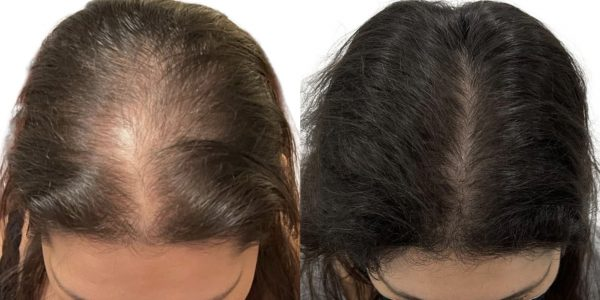
Hair loss no longer requires accepting gradual thinning or resorting immediately to surgical procedures. Advanced Hair Exosome Therapy at Grazia Skin Clinic provides a scientifically proven, non-surgical solution that restores your hair at the cellular level. By awakening dormant follicles, reducing micro-inflammation, and rebuilding your scalp’s vascular network, exosomes deliver thicker, healthier hair.
Take the first step toward restoring your hair. Book your comprehensive trichological consultation at Grazia Skin Clinic today.