Nail Fungus Treatments at Grazia Skin Clinic
Healthy, pristine nails are more than just a cosmetic asset; they are a reflection of your overall systemic health and personal well-being. Yet, millions of individuals worldwide quietly battle a persistent, embarrassing, and often painful condition that alters the very structure of their hands and feet: onychomycosis, commonly known as nail fungus.
For many, the toll of nail fungus extends far beyond physical discomfort. It carries a heavy emotional and social burden. Individuals suffering from advanced onychomycosis frequently experience profound self-consciousness The constant anxiety of someone noticing the unsightly discoloration can erode personal confidence and impact daily interactions.
Compounding this frustration is the notoriously difficult nature of treating nail fungus. Over-the-counter (OTC) antifungal creams, lacquers, and liquids often promise quick fixes but struggle to achieve true clearance.
Historically, the only reliably effective medical alternative was a prolonged course of systemic oral antifungal medications. While these drugs can kill the fungus from within the bloodstream, they come with a significant catch. Consequently, patients are often forced to undergo routine, inconvenient blood draws just to monitor their liver enzymes during treatment.
The Science of Nail Fungus: Causes, Symptoms, and Pathology
To effectively combat nail fungus, it is essential to look beneath the surface and examine the underlying micro-organisms and biological mechanisms driving the infection. Onychomycosis is not a single, uniform disease; rather, it is an umbrella term for fungal invasions of the nail unit caused by three distinct classes of pathogens: dermatophytes, yeasts, and non-dermatophyte molds.
1. The Biological Pathogens
- Dermatophytes: These specialized fungi are responsible for the vast majority (nearly 85% to 90%) of all nail fungus cases. The most frequent culprits are Trichophyton rubrum and Trichophyton mentagrophytes. Dermatophytes are uniquely adapted to live on dead keratinized tissue.
- Yeasts: Infections driven by yeasts, primarily from the Candida genus (such as Candida albicans), are more frequently observed in fingernails than toenails.
- Non-Dermatophyte Molds: Species such as Aspergillus, Fusarium, and Scopulariopsis represent a smaller percentage of cases. However, they are notoriously aggressive and highly resistant to standard chemical antifungal therapies, making advanced physical modalities like laser therapy indispensable.
2. How the Infection Takes Root
A fungal infection begins when microscopic fungal spores find an entry point into the nail apparatus. Even an imperceptible separation between the nail plate and the underlying nail bed provides a perfect gateway.
Once inside, the environment is ideal for fungal proliferation. Fungi thrive in dark, humid, and poorly ventilated spaces, which is precisely why toenails are affected up to ten times more frequently than fingernails. If the matrix becomes chronically infected, the nail may grow out permanently deformed.
3. Key Symptoms and Visual Indicators
Identifying nail fungus early can significantly minimize damage and dramatically reduce the overall duration of clinical treatment. While an accurate diagnosis requires a professional dermatological assessment, look for these classic warning signs:
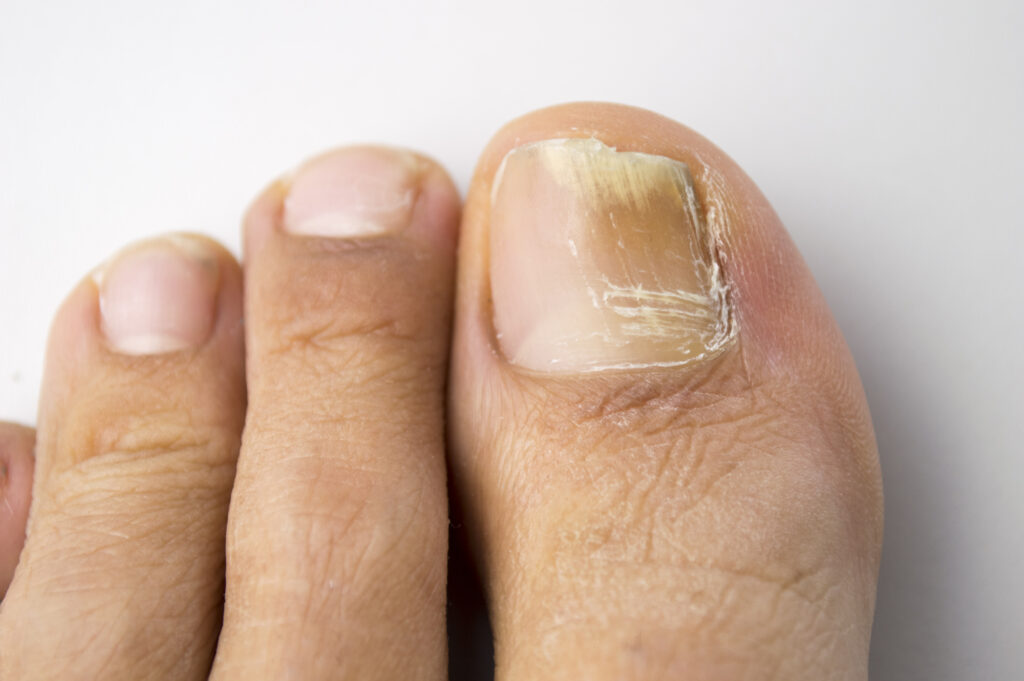
- Subungual Hyperkeratosis: A rapid buildup of chalky, scaly, or keratinous debris underneath the nail plate, causing the nail to lift away from its pink bed (a condition known as onycholysis).
- Distinct Discoloration: The nail plate loses its natural, translucent clarity and healthy pink hue, turning a dull white, pale yellow, deep amber, brown, or even greenish-black depending on the invading species.
- Morphological Distortion: The nail plate becomes highly irregular, developing ridges, rough textures, or extreme thickening that makes normal trimming with household clippers nearly impossible.
- Brittleness and Friability: The nail structure becomes fragile, crumbling easily at the edges or breaking off in jagged, painful pieces when subjected to minimal pressure.
- Persistent Odor: As the fungus decomposes organic cellular debris underneath the nail, it often produces a foul, sour, or cheesy odor that remains even after thorough washing.
- Pain and Discomfort: While early stages are usually painless, advanced thickening exerts intense, direct pressure on the highly sensitive nerve endings of the nail bed, making walking, wearing closed shoes, or exercising intensely painful.
Why Traditional Treatments Routinely Fail
When faced with the initial signs of nail fungus, most individuals follow a predictable path: they turn to home remedies or over-the-counter options, only to find themselves trapped in a frustrating, costly cycle of temporary improvement followed by aggressive recurrence. Understanding the limitations of these conventional options highlights why advanced clinical intervention is necessary.
The Ineffectiveness of Home Remedies and Topicals
The foundational reason topical remedies fail is a basic matter of physical access. Your nail is composed of up to 150 layers of compacted, dead keratinized cells tightly bound together to create an evolutionary shield. This barrier protects your fingertips and toe tips from external injury.
Prescription-strength antifungal nail lacquers feature slightly enhanced chemical penetration enhancers. However, clinical data reveals their efficacy rate remains low when used alone—often hovering under 12% to 15% clearance over a year of daily application.
The Hidden Risks of Systemic Oral Medications
To bypass the nail plate, conventional medicine historically relied on oral antifungal pills, such as terbinafine or itraconazole. When swallowed, these medications enter the systemic bloodstream and are delivered directly to the nail matrix via capillary circulation. While this method is significantly more effective than topicals, it introduces notable systemic challenges:
- Hepatotoxicity: Oral antifungals are metabolized extensively by the liver. They place a heavy burden on hepatic pathways, carrying a risk of drug-induced liver injury. Patients with a history of liver disease, alcohol use, or sluggish metabolic function are poor candidates for this treatment.
- Mandatory Blood Monitoring: To ensure safety, dermatologists must order baseline liver function tests (LFTs) before writing a prescription, followed by repeat blood draws every 4 to 6 weeks to check for elevated liver enzymes.
- Extensive Drug Interactions: Oral antifungals disrupt the cytochrome P450 enzyme system in the liver. This system is responsible for breaking down many widely prescribed medications, including statins for cholesterol, blood thinners, blood pressure medications, and certain antidepressants. Managing these interactions can be complex for patients taking multiple daily medications.
- Gastrointestinal Distress: A substantial percentage of patients report persistent nausea, abdominal bloating, diarrhea, loss of appetite, or temporary taste disturbances during their multi-month oral treatment course.
The Grazia Breakthrough: Advanced Laser Nail Fungus Treatment
At Grazia Skin Clinic, we approach dermatological care through a lens of clinical excellence, safety, and innovation. Our advanced laser therapy treats onychomycosis by completely eliminating the risks of oral medications and the absolute failure rates of topical creams.
The Physics of Targeted Photo-Thermal Destruction
Our laser system operates on the advanced principle of selective photothermolysis.
This intense, targeted heat causes:
- Immediate denaturation of the structural proteins within the fungal cell walls.
- Deactivation of the fungal spores, preventing them from reproducing or spreading to adjacent tissue.
- Direct destruction of the delicate mycelial networks that sustain the active infection.
Because the laser energy is delivered in ultra-fast, micro-second pulses, the heat does not accumulate in the surrounding healthy skin or digital nerves. This makes the entire procedure safe, exceptionally precise, and highly comfortable for the patient.
Why Choose Laser Therapy at Grazia Skin Clinic?
- Clinically Proven Efficacy: Clinical studies demonstrate that targeted laser treatments achieve high rates of fungal eradication and visible nail clearance, far outperforming standard topical options.
- Absolute Structural Safety: The laser targets only the foreign fungal pathogens. It leaves the delicate anatomy of the nail matrix, the nail bed, the surrounding cuticle, and the adjacent skin completely intact and uninjured.
- Zero Systemic Side Effects: Because this is a localized physical therapy, nothing enters your systemic bloodstream. There is zero risk of liver toxicity, no need for regular, painful blood draws, and no chance of dangerous drug interactions.
- Quick, Walk-In Sessions: A comprehensive treatment session covering all ten digits typically takes between 15 to 30 minutes. It easily fits into a lunch break, allowing you to return to work or daily activities immediately.
- Virtually Painless Experience: Most patients experience only a mild, temporary warming sensation or a light, passing snap against the nail plate. The treatment requires no local anesthesia, injections, or downtime.
- Accelerated Natural Healing: Beyond killing the active fungus, the localized thermal energy stimulates micro-circulation in the nail bed. This boost in blood flow delivers fresh nutrients and immune cells to the area, accelerating the growth of a brand-new, healthy nail plate.
The Grazia Clinical Protocol: What to Expect During Your Treatment Journey
We understand that seeking medical treatment can sometimes feel intimidating. At Grazia Skin Clinic, we prioritize patient education and transparency, ensuring you feel comfortable, informed, and confident at every stage of your clinical journey. We do not believe in one-size-fits-all treatments; our protocols are customized to match the severity of your specific infection.
Phase 1: The Initial Dermatological Consultation
Your journey begins with an in-depth clinical evaluation by our expert dermatologists. During this initial visit, we perform a detailed visual examination of the affected hands or feet. We carefully evaluate the degree of nail lifting, the depth of discoloration, and whether the vital nail matrix is compromised.
Phase 2: Professional Medical Prepping
To maximize the penetration and effectiveness of the laser energy, our clinical team gently preps the affected nails immediately before your session. If your nails are severely thickened or distorted by hyperkeratosis, we use sterile, specialized medical instruments to gently thin down the surface of the nail plate. The prepping is entirely painless and helps restore a more uniform appearance to the nail right away.
Phase 3: The Laser Treatment Session
Once your nails are prepped, you will relax in our dedicated treatment suite. Both you and our laser specialist will wear protective eyewear specifically calibrated to the laser’s wavelength.
As the handpiece fires, you will hear a rapid clicking sound and feel a localized warming sensation within the nail.
Phase 4: Post-Treatment Evaluation and Monitoring
Because nails grow slowly, you will not see a perfectly clear nail instantly when you stand up from the laser chair. Dead fingernails and toenails cannot magically clarify; they must be physically replaced by new growth.
Complete Benefits of Advanced Laser Therapy
Choosing the right treatment protocol can mean the difference between a lifetime of concealing your hands and feet and stepping out with absolute confidence. Laser nail fungus treatment at Grazia Skin Clinic offers distinct, life-changing benefits that make it the gold standard of modern podiatric dermatology.
1. High Clearance and Success Rates
The primary benefit of laser therapy is its exceptional clinical efficacy. By delivering high-intensity light energy directly through the nail matrix and into the subungual space, it eliminates fungal pathogens that other treatments cannot reach. Clinical tracking shows a significant improvement in nail color, texture, and structural integrity across various types of dermatophyte infections.
2. Complete Safety and Non-Invasive Design
Unlike surgical nail removal (avulsion), which involves physically tearing the nail plate away from the finger or toe under local anesthesia, laser therapy is completely non-invasive. There are no open wounds, no surgical incisions, no bleeding, and no risk of post-operative bacterial infections. It leaves the natural anatomy intact while targeting only the microscopic invaders.
3. Immediate Return to Active Daily Life
There is absolutely zero downtime associated with our advanced laser protocol. The moment your 20-minute session concludes, you can immediately put your socks and shoes back on, walk out of our Lajpat Nagar clinic, drive, return to your professional office, or engage in intense physical workouts. It causes no lingering soreness or lifestyle restrictions.
4. Long-Term Financial Value
While over-the-counter creams, specialized medicated polishes, and alternative therapies may seem inexpensive initially, their costs accumulate significantly over years of continuous, ineffective use. When you factor in the expense of months of topical products, regular doctor visits, and mandatory laboratory blood panels for oral medications, investing in a definitive, highly effective course of laser sessions is a financially smart, long-term solution.
5. Profound Emotional and Psychological Relief
The psychological benefits of restoring your nails are often the most rewarding for our patients. You can look forward to shedding the daily anxiety of hiding your hands or feet.
Essential Aftercare and Long-Term Prevention Protocol
Fungal spores are incredibly resilient and common in our daily environments. Because a successful laser treatment completely eradicates the fungus currently living in your nail bed but cannot modify your genetics or alter external environments, a rigorous, daily aftercare and prevention routine is vital to prevent reinfection.
+-------------------------------------------------------------------------+
|                  DAILY REINFECTION PREVENTION TRIAD                     |
+-------------------------------------------------------------------------+
|                                                                         |
|         [1] FOOTWEAR SANITATION      -->   Antifungal UV / Sprays       |
|         [2] MOISTURE MANAGEMENT      -->   Moisture-Wicking Socks       |
|         [3] ENVIRONMENTAL AWARENESS  -->   Protective Sandals in Pools  |
|                                                                         |
+-------------------------------------------------------------------------+
Think of laser therapy as clearing the ground, while your home aftercare ensures the soil remains inhospitable to future fungal invaders. Here is our comprehensive guide to protecting your investment in healthy nails:
1. Rigorous Footwear Hygiene and Management
- Complete Shoe Decontamination: Your shoes are prime breeding grounds for fungal spores. After starting laser therapy, treat all your worn shoes with an antimicrobial or antifungal shoe spray containing active ingredients like miconazole or tolnaftate. Alternatively, use a specialized ultraviolet (UV) shoe sanitizer insert to destroy spores residing inside your footwear.
- The 24-Hour Shoe Rotation Rule: Avoid wearing the exact same pair of closed-toe shoes two days in a row. Give each pair at least 24 to 48 hours to air out completely in a well-ventilated, sunlit space. This allows internal moisture from sweat to evaporate fully, disrupting the damp environment fungi need to survive.
- Discard Advanced Infections: If you own old, worn-out athletic sneakers that you wore regularly during the peak of your fungal infection, the safest option is to discard them entirely to avoid exposing your newly treated nails to high concentrations of spores.
2. Advanced Moisture Management
- Switch Your Socks: Immediately stop wearing standard 100% cotton socks. Cotton absorbs sweat and holds it directly against your toenails all day, creating a virtual greenhouse for fungal growth.
- Change Socks Frequently: If you exercise intensely, go for a long walk, or work long hours in a warm environment, change your socks immediately afterward to keep your feet clean and dry.
- Apply Antifungal Foot Powders: Lightly dust the inside of your fresh socks and shoes every morning with an absorbent, medicated antifungal powder to control sweat production and add an extra layer of defense throughout the day.
3. Smart Physical Habits and Grooming
- Flawless Drying Technique: After showering, bathing, or swimming, dry your feet thoroughly with a clean towel. Pay extra attention to the narrow spaces between your toes, where moisture often hides and initiates fungal infections (athlete’s foot) that can easily spread to the nails.
- Correct Nail Trimming: Always trim your nails straight across using clean, sharp clippers. Avoid rounding or tapering the deep corners of the nail plate, as this weakens the structural edge and can lead to painful ingrown nails, creating a pathway for fungal spores to enter.
- Never Share Grooming Instruments: Keep your personal set of nail clippers, emery boards, and files exclusive to you. Never share them with family members. If you are treating an infected nail, use a dedicated clipper for that specific nail and a different one for your healthy nails to prevent cross-contamination. Disinfect all tools with rubbing alcohol after each use.
4. Navigating Public Spaces Wisely
- Wear Protective Footwear: Never walk barefoot in high-risk public spaces, such as communal gym locker rooms, public swimming pool decks, hotel showers, or wellness spas. Always wear protective flip-flops or water shoes to shield your feet from spores left behind by others.
- Choose Certified Pedicure Salons: If you visit a salon for nail grooming, ensure they follow strict medical-grade sterilization procedures, such as autoclaving their metal instruments between clients. Do not hesitate to ask how they sanitize their foot basins, or consider bringing your own personal grooming kit.
Conclusion: Reclaim Your Confident, Barefoot
Fortunately, advancements in dermatological science have changed the landscape of care. Advanced Laser Nail Fungus Treatment at Grazia Skin Clinic offers a safe, highly effective, and completely non-invasive alternative.