
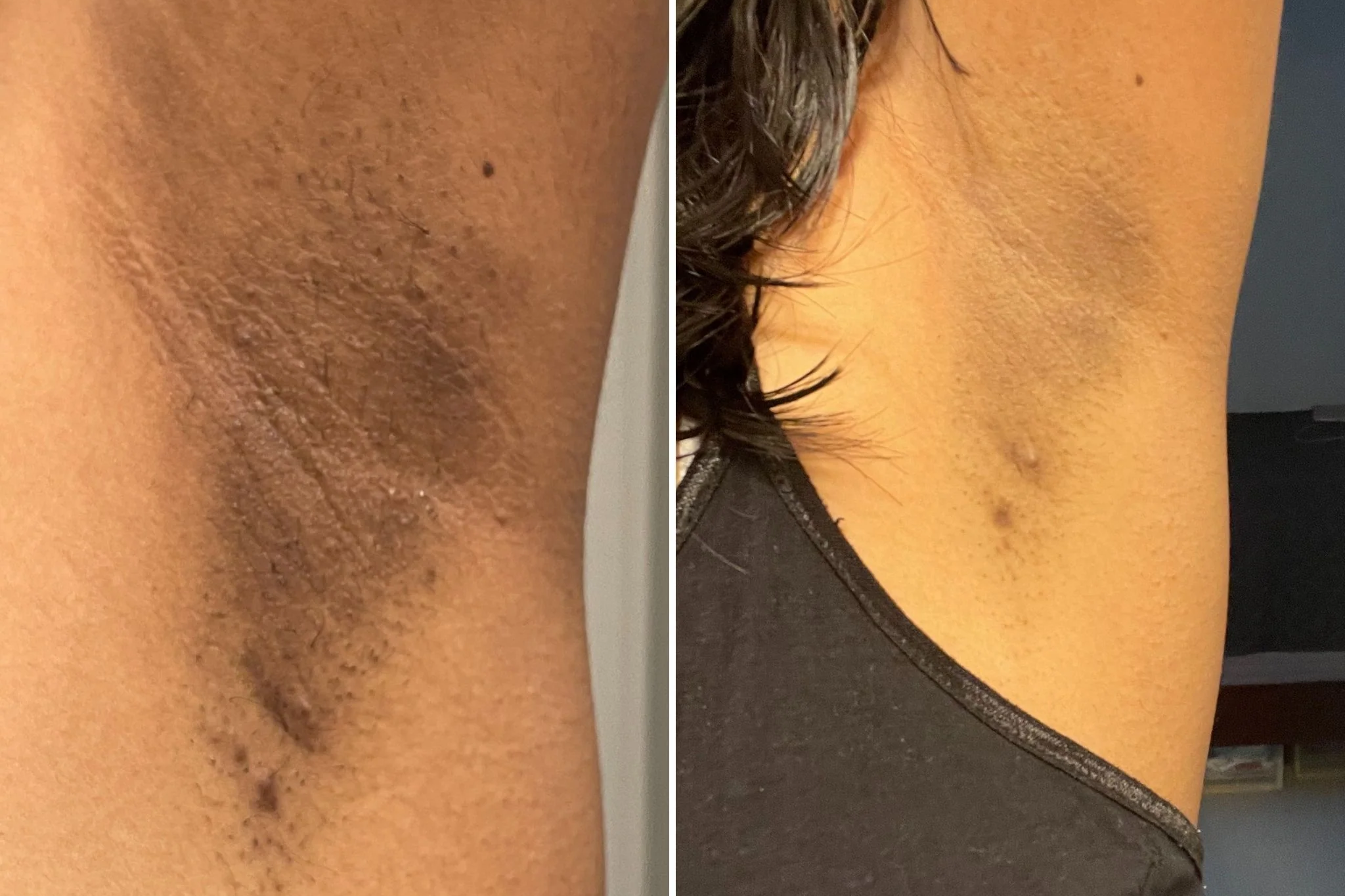
1. Introduction To Hyperpigmentation
Axillary hyperpigmentation—commonly referred to as underarm darkening—is a widespread dermatological concern that affects millions of individuals globally, regardless of gender, skin type, or ethnicity.
At Grazia Skin Clinic (located in Lajpat Nagar 4, New Delhi), we approach underarm darkening not merely as a superficial flaw, but as a complex physiological condition requiring precise medical diagnosis and customized, multi-modal clinical interventions.
2. Anatomical Foundations: Why the Axillary Vault is Prone to Darkening
To understand why the underarms are uniquely vulnerable to hyperpigmentation, one must look at the specific anatomy and histology of the axillary region:
- Friction and Chafing (Acanthosis and Lichenification): The axilla is a structural intertriginous zone—an area where skin naturally rubs against skin or tight clothing. This chronic, low-grade mechanical friction causes microscopic abrasions. In response to this repetitive trauma, the skin defends itself by thickening (hyperkeratosis) and ramping up melanin production, leading to Post-Inflammatory Hyperpigmentation (PIH).
- High Density of Appendages: The abundance of terminal hair follicles and sweat glands means the underarm is a hotbed for microbial colonization and biochemical activity. The degradation of sweat by local bacteria produces chemical byproducts that can cause mild, chronic contact dermatitis, further stimulating melanogenesis.
- Thin Epidermal Barrier: Paradoxically, while the skin can thicken under chronic trauma, the baseline epidermal barrier in the underarms is relatively thin and highly permeable. This makes it incredibly susceptible to chemical irritation from topical agents, such as alcohol-laden deodorants, synthetic fragrances, and aggressive antiperspirants.
3. Primary Causes and Triggers of Underarm Darkening
Effective clinical treatment relies entirely on accurate etiology. True underarm clearing cannot be achieved with a “one-size-fits-all” bleaching cream; it requires diagnosing the precise biological or environmental driver.
A. Post-Inflammatory Hyperpigmentation (PIH)
PIH is the most common culprit behind underarm darkening. Whenever the skin experiences inflammation or trauma, the inflammatory cascade releases chemical mediators such as prostaglandins, leukotrienes, and interleukins. These mediators directly stimulate local melanocytes, causing them to accelerate the synthesis of melanin and transfer it to surrounding epidermal cells (keratinocytes).
- Mechanical Epilation: Shaving with dull razors scrapes away the protective stratum corneum. Waxing, especially when performed at high temperatures or with aggressive pulling, causes thermal and mechanical trauma to the follicular wall.
- Chemical Irritants: Deodorants and antiperspirants containing aluminum compounds, synthetic fragrances, parabens, and alcohol can induce subclinical contact dermatitis. The user may not notice an overt rash, but the persistent, low-grade inflammation silently drives melanin deposition.
B. Acanthosis Nigricans (AN)
Acanthosis Nigricans is a metabolic cutaneous syndrome characterized by velvety, hyperpigmented plaques that typically manifest in intertriginous areas like the neck and underarms.
- The Insulin Resistance Connection: When an individual has insulin resistance (common in conditions like Obesity, Prediabetes, Type 2 Diabetes, and Polycystic Ovary Syndrome – PCOS), circulating levels of insulin are abnormally high.
- Cellular Proliferation: Excess insulin binds to Insulin-like Growth Factor-1 (IGF-1) receptors on keratinocytes and dermal fibroblasts. This binding stimulates rapid, abnormal proliferation of these cells, causing the skin to take on a thickened, velvety, and dark appearance. Treating AN requires a dual approach: systemic metabolic management combined with advanced clinical dermatology.
C. Hormonal Fluctuations
The endocrine system plays a massive role in skin pigmentation.
- Estrogen and Progesterone: Elevated levels of these hormones during pregnancy, oral contraceptive use, or hormone replacement therapy stimulate melanocyte-stimulating hormone (MSH) pathways. This is why many women notice a sudden, pronounced darkening of their underarms, lineas nigra, and face (melasma) during gestational periods.
- Thyroid Dysfunction: Both hypothyroidism and hyperthyroidism can disturb baseline cellular metabolism, occasionally resulting in diffuse skin pigmentation abnormalities, including the axilla.
D. Hyperhidrosis and Microbial Overgrowth
Excessive sweating (hyperhidrosis) keeps the axillary vault constantly moist. This chronic maceration breaks down the skin barrier, allowing normal skin flora, such as Corynebacterium species, to overproliferate. The metabolic waste products of these bacteria, combined with the continuous moisture, irritate the skin, initiating the inflammatory-pigmentation cycle.
4. Advanced Clinical Diagnostics at Grazia Skin Clinic
Before any laser fires or chemical peel is applied, our team conducts an exhaustive diagnostic evaluation to chart your personalized treatment roadmap.
| Diagnostic Method | Clinical Purpose | What We Evaluate |
| Wood’s Lamp Examination | Uses transillumination to detect the exact depth of the melanin pigment. | Differentiates between epidermal (surface), dermal (deep), and mixed hyperpigmentation. |
| Digital Dermatoscopy | High-magnification skin analysis. | Rules out active fungal infections (like erythrasma), structural lichenification, or cellular abnormalities. |
| Comprehensive Metabolic Screening | Review of medical history and lab panels if systemic issues are suspected. | Checks for underlying markers of insulin resistance, PCOS, or thyroid imbalances. |
5. In-Clinic Treatment Modalities: The Gold Standards
At Grazia Skin Clinic, we leverage an advanced portfolio of non-surgical, medical-grade technologies to break down pigment, resurface the skin, and suppress future melanin production.
A. Advanced Q-Switched Nd:YAG Laser Therapy
The Q-Switched Neodymium-doped Yttrium Aluminum Garnet (Nd:YAG) laser is the undisputed gold standard for deep, stubborn axillary pigmentation.
- Mechanism of Action: Operating at dual wavelengths ($1064\text{ nm}$ for deep dermal pigment and $532\text{ nm}$ for superficial epidermal pigment), this laser utilizes the principle of Selective Photothermolysis. It delivers ultra-short pulses of energy in nanoseconds. The melanin clusters in the skin absorb this energy so rapidly that they undergo a photoacoustic shockwave, shattering into microscopic fragments without heating or damaging the surrounding healthy skin.
- The Clearance Process: Once shattered, the body’s immune system takes over. Local macrophages engulf the microscopic pigment particles and safely flush them out through the lymphatic system over the following weeks.
- Why It’s Safe for Indian Skin: The $1064\text{ nm}$ wavelength bypasses the outer layers of the epidermis, making it exceptionally safe for deeper, melanin-rich skin types (Fitzpatrick Scale types IV-VI), minimizing any risk of paradoxical burning or secondary PIH.
B. Medical-Grade Chemical Peels & Micro-Peels
Chemical peeling involves the application of precise, chemically calibrated formulations to exfoliate dead, pigmented layers of skin and stimulate rapid cellular turnover.
- Glycolic Acid Peels: An Alpha Hydroxy Acid (AHA) derived from sugarcane, glycolic acid has the smallest molecular size of all AHAs. It deeply penetrates the intercellular cement binding dead skin cells together, promoting rapid shedding of the hyperpigmented stratum corneum.
- Lactic Acid Peels: Exceptionally gentle and naturally hydrating, lactic acid gently breaks down pigment while simultaneously boosting the skin’s natural moisture factors—perfect for sensitive axillary skin prone to dryness.
- Salicylic Acid Peels: A Beta Hydroxy Acid (BHA) that is lipophilic (oil-soluble). It penetrates deep into the pores and apocrine glands, clearing out sebum, reducing bacterial counts, and soothing active inflammation.
- Advanced Combination & Designer Peels: We utilize specialized formulations blending Kojic Acid, Arbutin, Retinol, and Vitamin C. These ingredients act as tyrosinase inhibitors—they biochemically block the enzyme responsible for converting tyrosine into melanin, preventing new dark spots from forming even as the old ones flake away.
C. Ultimate Clinical Hydra-Facials / Oxy-Infusion for Axillae
Who says facials are only for the face? Our specialized underarm detox utilizes medical-grade hydra-dermabrasion technology to deeply cleanse, exfoliate, and nurture the underarm tissue.
- Vortex Cleanse & Peel: Deeply vacuums out accumulated antiperspirant residue, dead skin cells, and oxidized sebum trapped within the deep axillary pores.
- Vortex Extraction: Uses gentle, automated suction to eliminate blackheads and clear congested hair follicles.
- Antioxidant & Peptide Infusion: Floods the freshly exfoliated skin with pressurized oxygen, hyaluronic acid, glutathione, and brightening peptides. This deeply hydrates, calms inflammation, and instantly brightens the skin matrix.
6. Comprehensive Client Benefits: What to Expect
Choosing clinical interventions at Grazia Skin Clinic yields transformative results that far outpace home remedies:
- Flawless, Uniform Skin Tone: Visible, dramatic reduction in dark patches, resulting in a perfect match between your underarms and the rest of your body.
- Refined Skin Texture: Clinical exfoliation and laser-induced collagen remodeling smoothen out rough, “goosebump-like” textures, leaving the skin soft and supple.
- Pore Minimization and Odor Control: Advanced therapies deep-clean the follicular units. This minimizes dilated pores and dramatically reduces the structural buildup of odor-causing bacteria.
- Enhanced Confidence and Wardrobe Freedom: Step out in sleeveless attire, swimwear, or athletic gear without a shred of self-consciousness.
- Long-Lasting, Scientifically Proven Results: Unlike temporary, abrasive DIY scrubs that can worsen PIH, medical treatments provide sustainable clearance by addressing cellular mechanics.
7. Strict Clinical Aftercare and Maintenance Protocol
The success of your treatment depends heavily on how you care for your skin post-procedure. The axilla is highly reactive, and adherence to this clinical protocol ensures optimal healing and prevents rebound pigmentation.
Immediate Post-Procedure Care (Days 1–3)
- Keep it Cool: Avoid hot showers, steam rooms, saunas, and intense workouts that cause excessive sweating for at least 48 hours.
- Skip Deodorants: Do not apply any commercial deodorants, antiperspirants, perfumes, or scented lotions to the treated area for 72 hours.
- Gentle Cleansing: Wash the area using only lukewarm water and a mild, fragrance-free, soap-free syndet bar. Gently pat dry with a clean microfiber towel—never rub.
- Apply Prescribed Soothing Agents: Use the post-procedure healing cream or pure aloe vera gel recommended by your Grazia dermatologist to support skin barrier repair.
Long-Term Maintenance and Prevention (Days 4 and Beyond)
- Rethink Hair Removal: We highly recommend transitioning to Laser Hair Reduction (LHR). LHR completely eliminates the need for shaving and waxing, cutting off the root cause of mechanical friction and PIH permanently.
- Switch to Safe Deodorants: Move away from alcohol- and aluminum-heavy formulations. Opt for dermatologically approved, fragrance-free, or natural mineral-based deodorants.
- Wear Breathable Fabrics: Choose loose-fitting clothing made from organic cotton, linen, or moisture-wicking fabrics to reduce friction and sweat buildup.
- Sun Protection: If you are wearing sleeveless clothes outdoors, apply a broad-spectrum, non-comedogenic sunscreen with an SPF of 30 or higher to protect the healing axillary skin from UV-induced melanogenesis.
8. Conclusion: Your Journey to Radiance Begins at Grazia
Underarm darkening is a multifaceted concern, but it is entirely treatable under expert medical care. At Grazia Skin Clinic, Lajpat Nagar 4, New Delhi, we blend clinical expertise, cutting-edge laser technologies, and targeted chemical peeling protocols to help you reclaim smooth, radiant, and even-toned skin.
You do not have to hide behind long sleeves or feel limited by hyperpigmentation. Schedule your professional, confidential consultation with our expert dermatologists today, and take your first step toward absolute skin confidence.