
Introduction: The Periorbital Aging Matrix
The periorbital zone—the delicate region surrounding the eyes—is one of the very first anatomical areas to exhibit visible signs of chronological and environmental aging. Structurally, the skin of the eyelids and the under-eye area is the thinnest on the human body, measuring a fraction of a millimeter in thickness. Because this tissue lacks an abundance of sebaceous glands and a dense collagen scaffolding, it is exceptionally vulnerable to structural breakdown.
At https://graziaskinhairlaserclinic.com/, we approach Dermal Eye Filler Treatment not merely as a superficial volume cosmetic fix, but as a precise anatomical reconstruction. The appearance of dark shadows, deep hollows, and tired eyes is fundamentally a structural issue. It is caused by the gradual resorption of the underlying facial bones, the thinning of the deep fat pads, and the loosening of the orbital septum ligament.
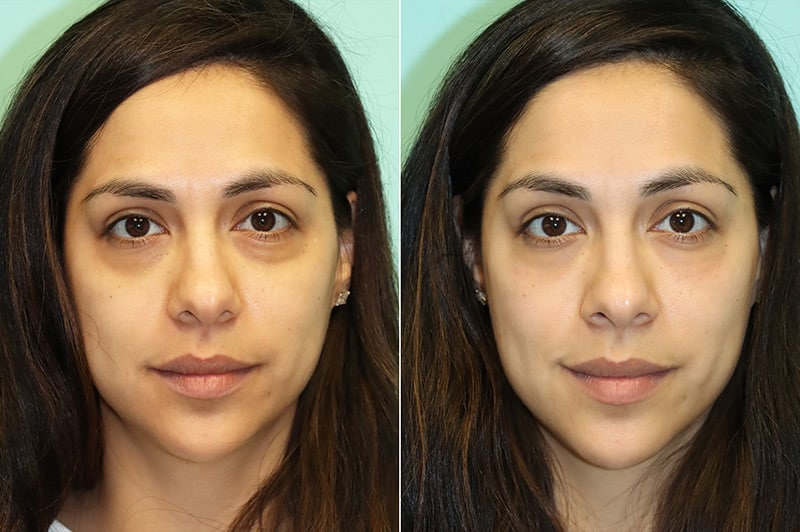
When these deep supporting structures diminish, the overlying thin skin sinks into the empty space, creating what clinicians call a Tear Trough Deformity. By precisely injecting medical-grade dermal fillers into these targeted anatomical planes, we restore the lost volumetric foundation. This structural lift smooths out the transitions between the lower eyelid and the cheek, eliminates dark shadows caused by hollow recesses, and completely revitalizes the facial profile from within.
Symptoms: Diagnosing Periorbital Fatigue and Volume Deficits
Patients seeking consultation at Grazia Skin Clinics for the under-eye area frequently present with a complex combination of genetic traits and age-related tissue changes. Differentiating between these structural symptoms is essential for planning an accurate injection strategy.
- Tear Trough Depressions: Deep, distinct hollows or tracks that run from the inner corner of the eye down onto the upper cheek, creating a sunken look.
- Shadow-Induced Dark Circles: Dark rings around the eyes that are not caused by skin pigment, but rather by light hitting a hollow recess. Specifically, this structural dip creates a physical shadow that mimics hyperpigmentation.
- Pseudo-Herniation of Orbital Fat (Under-Eye Bags): As the orbital septum weakens, deep fat pads can bulge outward. Consequently, this protrusion accentuates the hollow groove directly beneath it, making the eye bag look significantly more pronounced.
- Dermal Thinning and Fine Crepiness: A loss of structural collagen that causes the skin to resemble wrinkled tissue paper, exposing the dark, underlying orbicularis oculi muscle fibers beneath.
- Loss of Malar (Cheek) Support: The descent and flattening of the cheek fat pads, which leaves the lower eye area entirely without structural anchoring.
Types of Dermal Fillers for the Delicate Eye Area
Because the periorbital tissue is incredibly thin and unforgiving, choosing the correct material rheology (thickness, elasticity, and water-binding capacity) is paramount to preventing complications like unnatural swelling or lumps.
| Filler Category | Material Characteristics | Clinical Behavior | Ideal Clinical Case |
| Low Cohesivity Hyaluronic Acid (HA) | Soft, fluid-like gel that integrates seamlessly into tissues without clumping. | Binds a controlled amount of water to prevent puffy under-eye swelling. | Fine lines, superficial tear troughs, and thin periorbital skin. |
| Resilient Hyaluronic Acid (RHA) | Highly elastic gel designed to stretch and move naturally with facial expressions. | Moves naturally with blinking, smiling, and squinting without looking stiff. | Dynamic under-eye hollows in younger, expressive patients. |
| Deep Malar Structural Fillers | High density, high G-Prime (firmer) cohesive gels. | Placed deep on the bone to lift and support the cheek matrix from beneath. | Patients whose under-eye hollows stem from a collapsing cheek structure. |
| Non-HA Collagen Stimulators | Microparticles that spark the body’s natural collagen manufacturing. | Provides a gradual, soft plumping effect over several months. | Severe volume loss in patients who prefer non-HA alternatives. |
Treatment: The Multi-Layer Precision Injection Protocol
At Grazia Skin Clinics, safety and natural symmetry govern our injection techniques. The under-eye area contains a complex network of blood vessels; therefore, we employ an advanced, blunt-tip microcannula approach rather than traditional sharp needles.
1. Microcannula Technical Strategy
A single entry point is made on the upper cheek using a fine introductory needle. Following this, a blunt-ended, flexible microcannula is inserted into the entry point and guided smoothly under the skin into the tear trough zone. Because the cannula has a rounded tip, it simply pushes blood vessels aside rather than piercing them. As a result, this technique dramatically reduces the risk of bruising, swelling, and intravascular complications.
2. Deep Supraperiosteal Placement
To achieve a completely natural look, the filler must never be placed superficially directly into the skin. Instead, our expert injectors place the dermal gel deep beneath the muscle layer, resting directly on top of the orbital bone (supraperiosteal plane). By doing so, the natural muscle and fat layer remain on top of the filler, keeping the gel completely invisible while providing a smooth, structural lift to the surface.
3. Avoiding the Tyndall Effect
If an injector uses an incorrect, highly dense filler or places it too close to the surface, the gel will scatter light unnaturally. Consequently, the skin will develop a permanent, unnatural bluish tint known as the Tyndall Effect. Our strict adherence to using low-water-binding, highly cohesive gels placed in the deep structural planes ensures this cosmetic complication is completely avoided.
Aftercare: Stabilizing the Structural Gel
Once the dermal filler is placed, it requires a short stabilization period to integrate fully with your natural facial tissues. Precise aftercare prevents displacement and ensures an even, smooth result.
- No Physical Pressure or Massage: Avoid touching, rubbing, or applying firm pressure to the under-eye area for the first 48 hours. In doing so, you could inadvertently shift the malleable gel out of its precise treatment plane.
- Elevate Your Head While Sleeping: Keep your head elevated on two pillows for the first two nights post-treatment. This simple adjustment uses gravity to minimize standard fluid accumulation and morning swelling.
- Pause Strenuous Workouts: Refrain from heavy weightlifting, intense cardio, and hot yoga for 48 hours. High blood pressure and increased facial blood flow can aggravate minor swelling and increase the chance of bruising.
- Avoid Extreme Thermal Changes: Stay away from saunas, steam rooms, and intense facial steaming for the first week. High heat can accelerate early swelling before the filler has completely set.
- Postpone Facial Services: Do not schedule any facials, microdermabrasion, or chemical peels for at least two weeks post-filler to avoid external pressure on the healing periorbital zone.
Conclusion: Restoring the Radiance of the Eyes
Dermal eye filler treatments represent a profound intersection of facial architecture and aesthetic artistry. You do not have to live with a permanently tired appearance caused by genetic hollows or structural aging. At Grazia Skin Clinics, our advanced multi-layer cannula protocols focus on restoring lost skeletal support safely and naturally. By lifting the tear trough out of the shadows, we restore a smooth, youthful transition to your facial features—allowing you to look as refreshed, vibrant, and energetic on the outside as you feel on the inside.