The Ultimate Guide to HIFU Treatment: The NonSurgical Facelift
1. Introduction: The Evolution of Skin Tightening
In the realm of aesthetic medicine, the quest for the “fountain of youth” has shifted from invasive surgical tables to advanced energy-based devices. High-Intensity Focused Ultrasound (HIFU) represents the pinnacle of this shift. Originally developed for treating tumors, HIFU was adapted for cosmetic use after clinicians noticed its remarkable ability to tighten dermal tissues without damaging the skin surface.
Unlike lasers, which treat the superficial layers, or radiofrequency, which heats bulk tissue, HIFU is a micro-focused technology. It targets the SMAS (Superficial Muscular Aponeurotic System)—the same layer of tissue that surgeons manipulate during a traditional facelift.https://en.wikipedia.org/wiki/Focused_ultrasound
2. The Science: How HIFU Works
HIFU functions through a process known as Thermal Coagulation.
- Targeted Delivery: The device emits ultrasound waves that pass through the upper layers of the skin without affecting them.
- Focal Points: These waves converge at specific depths (1.5mm, 3.0mm, and 4.5mm).
- Heat Generation: At these focal points, temperatures reach between 60°C and 70°C.
- The Result: This heat creates “micro-lesions,” triggering the body’s natural wound-healing response. This results in the immediate contraction of collagen fibers and the long-term production of new Type I collagen and elastin.
3. Benefits of HIFU for the Face
HIFU is often referred to as a “Lunchtime Facelift” because of its efficiency and lack of downtime. Key benefits include:
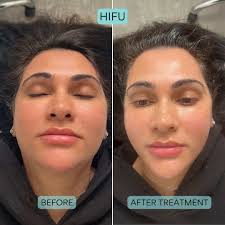
- V-Line Contouring: Sharpens the jawline and reduces the appearance of “jowls.”
- Brow Lifting: Lifts drooping eyelids and opens up the eye area.
- Nasolabial Fold Reduction: Softens the deep lines between the nose and mouth.
- Double Chin Reduction: Destroys fat cells (adipocytes) in the submental area while tightening the skin.
- Skin Texture: Refines pores and improves the overall “glow” by thickening the dermis.
4. Pros and Cons: A Realistic Comparison
The Pros
| Feature | Benefit |
| Non-Invasive | No needles, no incisions, and no scarring. |
| Natural Results | Because it relies on your body’s collagen, the look is gradual and natural. |
| Single Session | Many patients see significant results after just one treatment. |
| Long-Lasting | Results can last 12 to 18 months depending on lifestyle. |
The Cons
- Delayed Gratification: While some tightening is immediate, peak results take 3–6 months to appear.
- Discomfort: Some patients experience a “tingling” or “aching” sensation during the procedure as energy hits the bone/muscle.
- Operator Dependent: The safety and efficacy depend entirely on the technician’s ability to map the facial nerves correctly.
5. The Treatment Procedure: What to Expect
Phase 1: Consultation & Mapping
The clinician cleanses the skin and marks the face into specific zones. This ensures the ultrasound energy avoids “no-go zones” like the thyroid gland or major facial nerves.
Phase 2: Application of Ultrasound Gel
A cooling gel is applied to the skin. This acts as a conductor, allowing the ultrasound waves to pass into the tissue without friction or surface burns.
Phase 3: The Pulsing Process
The clinician moves the HIFU transducer over the skin. You will feel quick bursts of heat. The treatment usually targets three depths:
- 4.5mm: To tighten the muscle layer (SMAS).
- 3.0mm: To stimulate the deep dermis and fat remodeling.
- 1.5mm: To improve surface texture and fine lines.
6. Aftercare: Protecting Your Investment
Post-treatment care is vital for maximizing collagen synthesis.
- Sun Protection: Your skin will be more sensitive to UV rays. Apply a broad-spectrum SPF 50 daily.
- Avoid Extreme Heat: Stay away from saunas, hot tubs, or heavy exercise for 48 hours to prevent additional swelling.
- Hydration: Drink plenty of water. Collagen synthesis requires a hydrated environment.
- Skincare Adjustments: Avoid Retinols or Vitamin C serums for 3-5 days to prevent irritation.
- No Alcohol: Alcohol can put a strain on the liver, which is busy processing any fat cells broken down during the treatment.
7. Conclusion: Is HIFU Right for You?
HIFU is ideal for patients with mild-to-moderate skin laxity. It is a preventive tool for those in their 30s and a restorative tool for those in their 40s and 50s. While it cannot replace the dramatic results of a surgical facelift for severe sagging, it is the most powerful non-surgical alternative available in modern dermatology.