
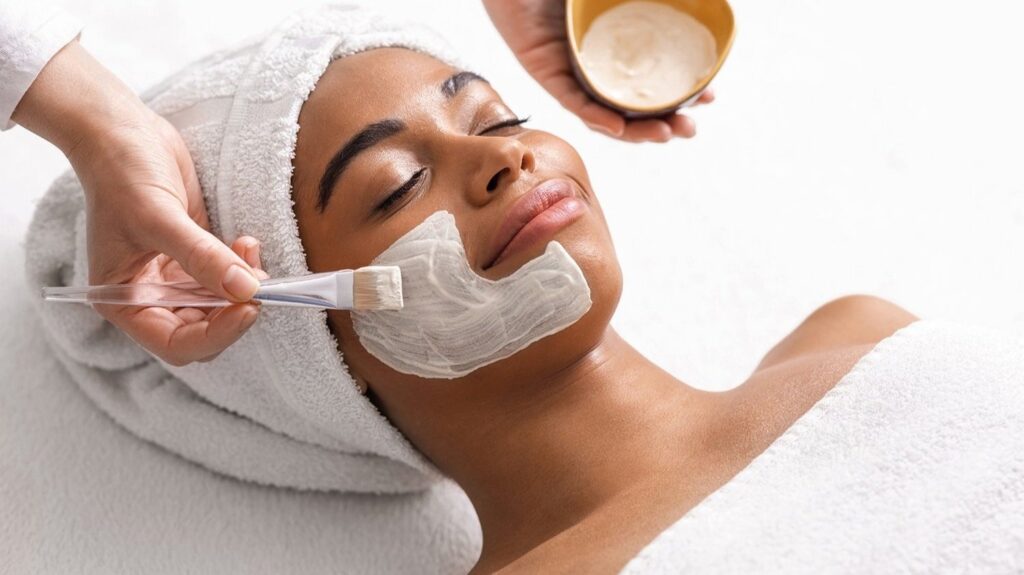
HydraFacial Technology & Skin Health
I. Introduction to Hydro-Dermabrasion
The HydraFacial is a patented, non-ablative skin resurfacing treatment. Unlike traditional microdermabrasion—which uses manual scrubbing or abrasive crystals—this technology utilizes Vortex-Fusion. This system creates a localized vacuum over the skin while simultaneously flushing the pores with specialized liquid solutions.
II. The 4-Step Clinical Mechanism
The efficacy of the HydraFacial is rooted in its systematic, multi-layered approach to the dermis and epidermis:
- Vortex-Exfoliation:
- Action: Uses Activ-4™ serum to remove dead skin cells.
- Biological Impact: This mechanical stimulation promotes “cell turnover,” bringing fresh, healthy cells to the surface faster than the natural 28-day cycle.
- Vortex-Peel:
- Action: A mixture of Glycolic and Salicylic acids (GlySal™).
- Biological Impact: It provides the benefits of a chemical peel without the post-treatment scaling. It softens sebum and dislodges deep-seated impurities.
- Vortex-Extraction:
- Action: A high-power, automated suction (using Beta-HD™ serum).
- Biological Impact: It creates a “honey-extractor” effect, pulling out blackheads and whiteheads from the follicular opening without the tissue trauma associated with manual squeezing.
- Vortex-Fusion:
- Action: Infusion of Antiox+™ (Antioxidants, Peptides, and Hyaluronic Acid).
- Biological Impact: Because the skin has just been exfoliated and the pores are clear, the “uptake” of these nutrients is significantly higher than topical application alone.
III. Histological & Skin Density Benefits
Clinical studies on hydradermabrasion have observed specific physiological changes in the skin structure:
- Increased Dermal Thickness: Regular treatments stimulate the papillary dermis, leading to a measurable increase in skin “plumpness” and thickness.
- Fibroblast Activation: The vacuum pressure acts as a form of “mechanical tension,” which signals fibroblasts to produce more Type I Collagen.
- Antioxidant Saturation: Research indicates that the skin’s antioxidant levels are increased by up to 30% immediately following the fusion step, providing a protective barrier against UV-induced free radical damage.
IV. Comparative Efficacy Study
| Category | Chemical Peels | Microdermabrasion | HydraFacial |
| Primary Goal | Cellular Resurfacing | Physical Smoothing | Total Skin Health |
| Inflammation | High (Controlled Burn) | Medium (Abrasive) | Low (Hydrating) |
| Hydration Level | Often Dehydrating | Neutral | High (Active Infusion) |
| Extraction Capability | None | Minimal | Deep & Systematic |
| Post-Care | Strict (No Sun/Heat) | Moderate | Immediate Makeup/Sun |
V. Targeted Treatment “Boosters”
The HydraFacial study highlights its versatility through “Boosters”—highly concentrated serums added to the standard protocol:
- Growth Factors (CTGF): Designed to restore skin health and diminish the appearance of fine lines.
- Britenol: Specifically formulated to target dark spots and sun damage (Vitamin C & Alpha-Arbutin).
- DermaBuilder: An advanced age-refining peptide complex that mimics Botox-like smoothing effects.
VI. Patient Safety & Indications
Ideal Candidates:
- Acne-Prone Skin: Effectively clears congestion and reduces the $P. acnes$ bacteria.
- Aging Skin: Improves texture, tone, and reduces fine lines through hydration.
- Sensitive Skin: Because the “abrasion” is liquid-based, even those with Rosacea can often tolerate the treatment.
Contraindications:
- Shellfish Allergy: Due to the use of Glucosamine in certain serums.
- Pregnancy: While generally safe, the GlySal peel is usually omitted as a precaution.
- Active Infections: Herpes Simplex (Cold Sores) or severe cystic acne in an inflammatory flare.
VII. Conclusion
The HydraFacial represents a shift in aesthetic science from “aggressive correction” to “preventative nourishment.” By combining physical and chemical exfoliation with high-pressure nutrient delivery, it provides immediate gratification (The Glow) while building long-term skin resilience and structural integrity.