Introduction: The Invisible Shield
Imagine your skin as a high-security fortress. The skin barrier, technically known as the stratum corneum, is the outer gate. It is a complex brick-and-mortar structure where your skin cells (corneocytes) act as the bricks, and a rich mixture of lipids (ceramides, cholesterol, and fatty acids) acts as the mortar.
When this barrier is intact, it performs two vital functions:
- Retention: It locks in moisture and essential nutrients.
- Protection: It keeps out environmental aggressors, pollutants, and pathogens.
However, in our quest for “glass skin,” we often over-exfoliate or use harsh products that dismantle this fortress. When the barrier breaks, your skin becomes a sieve—moisture leaks out (Transepidermal Water Loss or TEWL), and irritants seep in. Repairing the skin barrier isn’t just about vanity; it’s about restoring the biological health of your body’s largest organ.
Symptoms: How to Tell Your Barrier is Broken
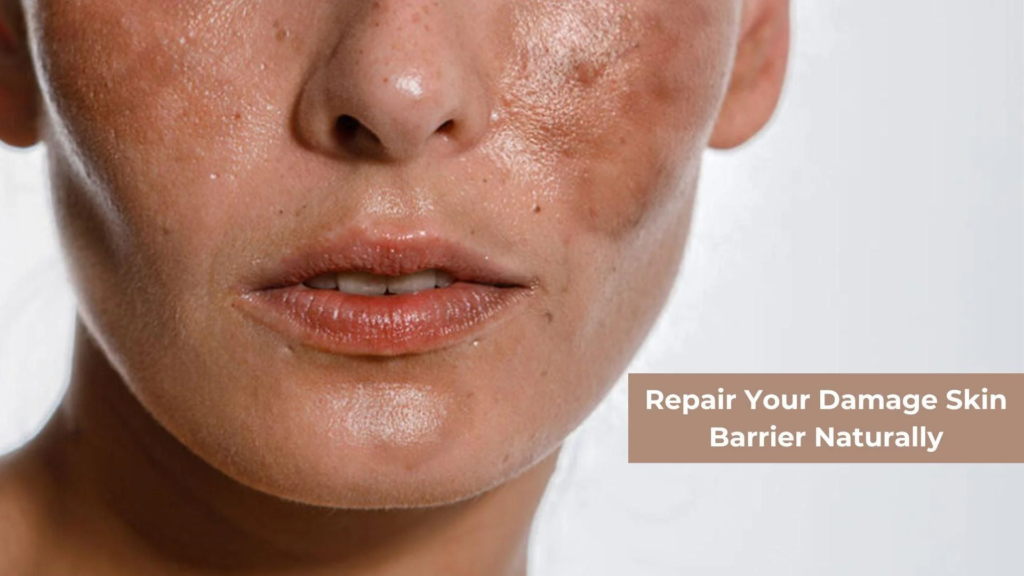
A compromised barrier doesn’t always look the same on everyone, but it usually “feels” quite distinct. If your usual moisturizer suddenly stings, your barrier is likely crying for help.
- Persistent Dryness and Flakiness: No matter how much oil or cream you apply, the skin feels “tight” and parched within an hour.
- Increased Sensitivity: Products that used to work perfectly now cause redness, itching, or a burning sensation.
- Inflammation and Redness: A general “angry” appearance, often accompanied by rough patches.
- Frequent Breakouts: When the barrier is weak, bacteria can penetrate more easily, leading to “acne cosmetica” or inflammatory papules.
- Texture Changes: Skin looks dull, feels papery, or shows premature fine lines caused by dehydration rather than aging.
Types of Skin Barrier Damage
Understanding how the damage occurred is the first step toward the right treatment.
| Type | Cause | Common Signs |
| Chemical | Over-use of AHAs/BHAs, Retinoids, or high-pH cleansers. | “Shiny” but dry skin, stinging upon product application. |
| Environmental | Low humidity, extreme cold, or excessive UV exposure. | Tightness, windburn, and rough texture. |
| Mechanical | Harsh physical scrubs, microdermabrasion, or towel rubbing. | Visible scratches, localized redness, and peeling. |
| Biological | Genetics (eczema/psoriasis), aging, or stress. | Chronic inflammation and persistent dry patches. |
What can damage your skin barrier?
Your skin defends against a barrage of threats each day: many come from outside your body, and a few come from within.
Some of the external and internal factors that can affect your skin barrier include:
- too humid or too dry an environment
- allergens, irritants, and pollutants
- too much sun exposure
- alkaline detergents and soaps
- exposure to harsh chemicals
- overexfoliation or overwashing
- steroids
- psychological distress
- genetic factors that may make you more prone to certain skin conditions, such as atopic dermatitis and psoriasis
Treatment: The “Back to Basics” Protocol
The mantra for barrier repair is “Less is More.” You cannot scrub your way out of a damaged barrier; you must soothe your way back to health.
1. The Immediate “Hard Reset”
Stop all active ingredients immediately. This includes Retinol, Vitamin C, AHAs (Glycolic acid), BHAs (Salicylic acid), and physical scrubs. Switch to a “Bland Routine” for at least 14 to 28 days—the time it takes for a full skin cell cycle.
2. Physiological Lipid Replacement
Look for products formulated with the “Golden Ratio” of lipids. Your barrier needs:
- Ceramides: To bridge the gaps between cells.
- Cholesterol: To improve elasticity.
- Fatty Acids: To provide the building blocks for repair.
3. Humectants vs. Occlusives
Effective treatment requires a two-step hydration strategy:
- Step A (Humectants): Apply ingredients like Hyaluronic Acid, Glycerin, or Panthenol (Vitamin B5) to damp skin to draw moisture into the cells.
- Step B (Occlusives): Seal that moisture in with “slugging” agents or thick balms containing Petrolatum, Squalane, or Shea Butter.
Professional Treatment Options
For severe damage, over-the-counter products might not be enough. Dermatologists often recommend:
- Barrier Repair Creams (Prescription Grade): Formulations like EpiCeram that mimic the skin’s natural lipid ratio exactly.
- LED Light Therapy: Specifically Red Light therapy to reduce inflammation and stimulate cellular repair.
- Hyaluronic Acid Injectables: Like Skinboosters, which hydrate the skin from the inside out.
Aftercare: Maintaining the Fortress
Once your skin no longer stings and the redness has faded, you enter the maintenance phase.
- The 60-Second Rule: Apply your moisturizer within one minute of washing your face to prevent TEWL.
- pH Balancing: Use cleansers with a pH of roughly $5.5$. Alkaline soaps strip the “acid mantle,” the skin’s first line of defense.
- Slow Reintroduction: When reintroducing actives, start with one product twice a week. If stinging occurs, stop immediately.
- Sun Protection: A damaged barrier is highly susceptible to UV damage. Use a mineral sunscreen (Zinc Oxide or Titanium Dioxide) as they are less likely to irritate sensitive skin than chemical filters.
How can you tell if your skin barrier is damaged?
- dry, scaly skin
- itchiness
- rough or discolored patches
- acne
- sensitive or inflamed areas
- bacterial, viral, or fungal skin infections
Conclusion
A damaged skin barrier is a temporary setback, not a permanent condition. By shifting your focus from “correcting” flaws to “nourishing” the skin’s biology, you allow your body to do what it does best: heal. Remember, glowing skin is a byproduct of healthy skin. Respect your barrier, and it will protect you in return.
Summary Table for Recovery
- Wash: Lukewarm water + Non-foaming cleanser.
- Treat: Centella Asiatica or Niacinamide (in low percentages).
- Seal: Ceramide-rich cream + SPF.
- Avoid: Fragrance, alcohol, and essential oils.
When your skin barrier is not functioning properly, you may be more prone to developing the following skin symptoms and conditions:https://www.reddit.com/r/SkincareAddiction/comments/186i90s/misc_has_anyone_successfully_healed_a_damaged/