
Understanding Skin Tags: A Comprehensive Guide to Causes, Treatments, and Care
Skin tags—scientifically known as acrochordons—are one of the most common benign skin growths. While they are usually harmless, they can often be a source of cosmetic concern or physical irritation. This guide explores everything you need to know about identifying and managing them.
What are Skin Tags?
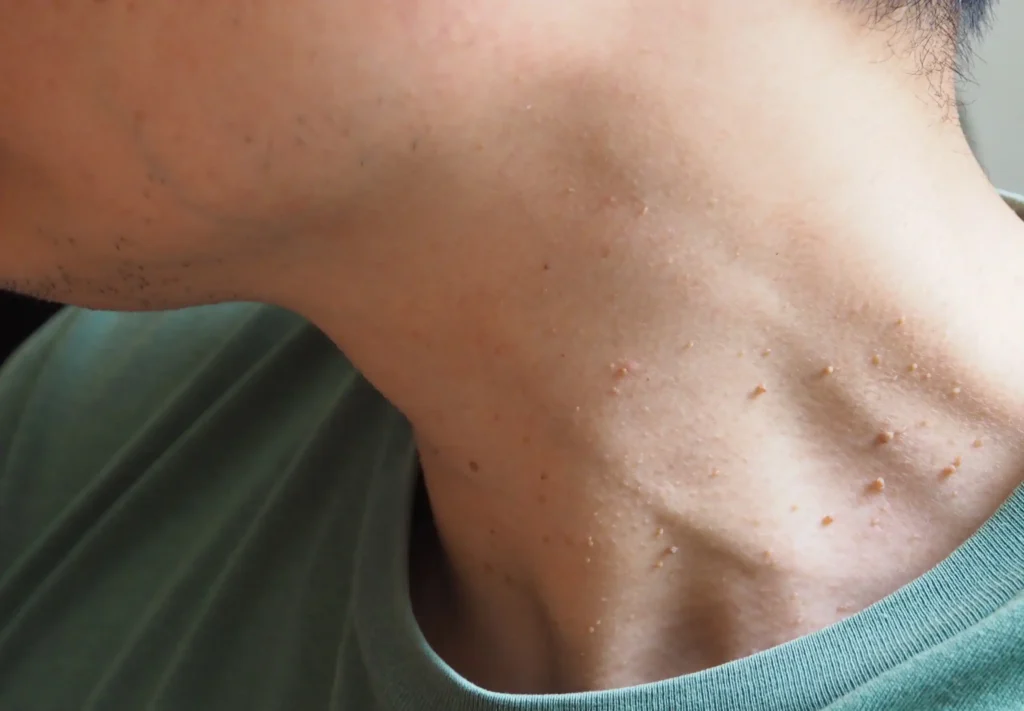
Skin tags are small, soft, flesh-colored or slightly darker growths that hang off the skin by a thin stalk called a peduncle. They typically range in size from 1mm to 5mm, though some can grow larger. You’ll most commonly find them in areas where skin rubs against skin or clothing, such as the neck, armpits, groin, and eyelids.
Why Do They Happen? (Causes & Risk Factors)
While the exact cause isn’t always clear, researchers believe they form when clusters of collagen and blood vessels become trapped inside thicker pieces of skin. Key factors include:
- Friction: Constant rubbing of skin-on-skin or tight clothing.
- Insulin Resistance: There is a strong correlation between skin tags and Type 2 diabetes or metabolic syndrome.
- Hormonal Fluctuations: They are frequently seen during pregnancy due to hormonal shifts and weight gain.
- Genetics: If your parents had them, you are more likely to develop them.
- Age: Prevalence increases significantly as we age, particularly after 50.
Symptoms and Identification
Skin tags are generally asymptomatic, meaning they don’t cause pain or itchiness on their own. However, symptoms can occur if they are:
- Irritated: Catching on jewelry or rubbing against a collar.
- Twisted: If the stalk twists, it can cut off blood supply, causing the tag to turn black or become painful.
- Visual: They appear as “pebbles” or “stalks” of skin rather than flat moles.
Types of Skin Growths
While “skin tag” is the general term, they are sometimes categorized by their appearance or location:
- Filiform: Long, thin, and thread-like (common on the face/eyelids).
- Pedunculated: Classic tags attached by a narrow stalk.
- Sessile: Broad-based growths that sit flatter against the skin.
Treatment Options: Current & Emerging
You should never attempt to “clip” a skin tag at home due to the risk of infection and heavy bleeding. Professional treatments include:
Current Standard Treatments
- Cryotherapy: Freezing the tag with liquid nitrogen, causing it to fall off within days.
- Cauterization: Using electrolysis (heat) to burn off the growth and seal the blood vessels.
- Surgical Excision: Removal with sterile surgical scissors or a scalpel (usually with a local anesthetic).
- Ligation: Tying off the base of the tag with surgical thread to cut off blood flow.
Emerging Solutions
- Topical Enzymatic Creams: New formulations are being studied that aim to break down the excess collagen without invasive procedures.
- Advanced Laser Therapy: Precision CO2 lasers offer faster healing times and minimal scarring for tags in sensitive areas like the eyelids.
Essential Aftercare
Proper healing prevents scarring and infection. Following a removal procedure:
- Keep it Clean: Wash the area gently with mild soap and water.
- Avoid Friction: Wear loose clothing to prevent rubbing the treated site.
- Antibiotic Ointment: Apply a thin layer of prescribed ointment or petroleum jelly to keep the wound moist.
- Sun Protection: Keep the area out of the sun or use SPF to prevent hyperpigmentation (dark spots) while the new skin heals.
Conclusion
Skin tags are a natural part of aging for many and are almost always medically insignificant. However, because they can mimic more serious skin conditions (like certain types of moles or skin cancer), it is always best to have a dermatologist evaluate any new growth. Whether you choose to remove them for comfort or aesthetics, modern treatments are quick, safe, and highly effective.
Note: If a skin tag changes color rapidly, bleeds, or grows significantly, consult a healthcare professional immediately.