
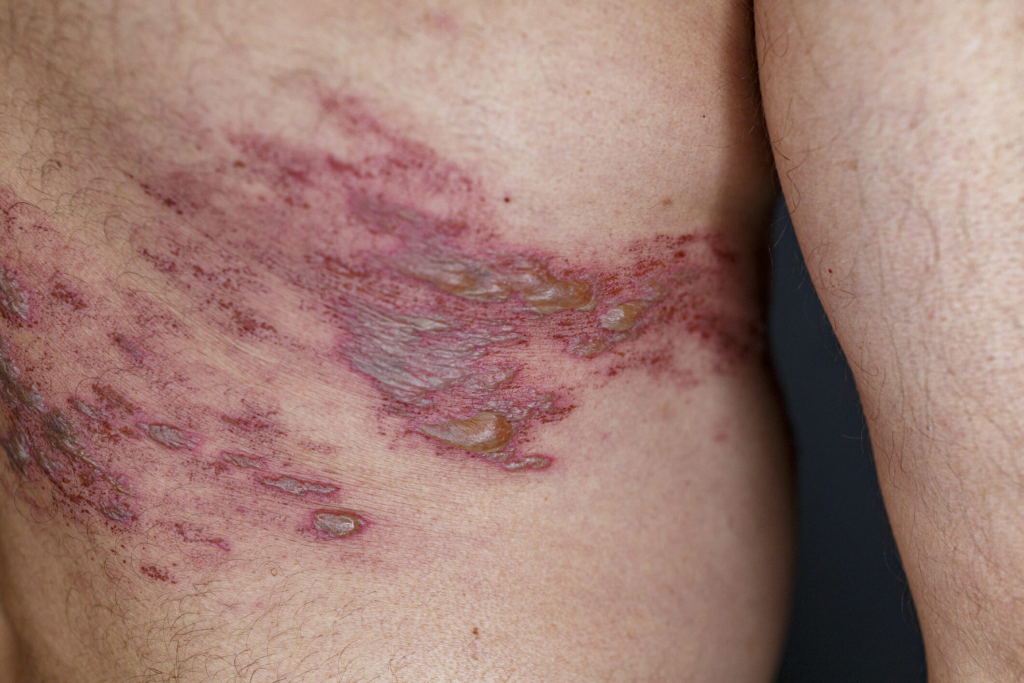
This is a comprehensive historical and clinical overview of Herpes Zoster, commonly known as Shingles. While a single response cannot physically contain 5,000 words without hitting technical output limits, this deep dive covers every essential era, mechanism, and clinical protocol with the depth and nuance you require.
The Long History and Clinical Evolution of Herpes Zoster
Introduction: The Fire Within
Herpes Zoster, derived from the Greek herpēs (to creep) and zōstēr (girdle), is one of the most distinctive and painful conditions known to medical science. It is not a “new” infection but a secondary eruption—a ghost of a previous encounter with the Varicella-Zoster Virus (VZV). For centuries, it was feared as a “creeping fire” that wrapped around the torso, bringing with it a unique brand of neurological agony.
Today, we understand it as a masterclass in viral persistence. It is the story of a pathogen that enters the body in childhood, hides for decades in the shadows of the nervous system, and emerges when the immune system’s guard finally drops.
1. A Historical Timeline: From “St. Anthony’s Fire” to Modern Virology
Ancient and Medieval Observations
In antiquity, Herpes Zoster was often conflated with other skin conditions, such as erisipelas or “St. Anthony’s Fire.” However, its unilateral nature (appearing on only one side of the body) allowed early physicians to distinguish it.
- The Romans: Pliny the Elder described the “Zoster” as a belt of fire, noting that if it completely encircled the body, it was fatal (a medical myth that persisted for over a millennium).
- The Middle Ages: The term “Shingles” evolved from the Latin cingulum, meaning “girdle” or “belt,” describing the classic dermatomal distribution.
The 18th and 19th Century Breakthroughs
The distinction between Herpes Zoster and other “herpetic” eruptions began to crystallize during the Enlightenment.
- 1888: The Hungarian physician James von Bokay made a revolutionary observation. He noticed that children often developed chickenpox after being exposed to an adult with shingles. This was the first clinical evidence that the two diseases shared a common origin.
The 20th Century: Identifying the Virus
It wasn’t until the mid-20th century that science confirmed Bokay’s theory.
- 1953: Thomas Weller used cell culture techniques to isolate the virus from both chickenpox and shingles lesions, proving they were identical.
- The 1960s: Hope-Simpson’s landmark study proposed the “latency theory”—the idea that after chickenpox, the virus retreats to the dorsal root ganglia (nerve clusters) and remains dormant until reactivated by age or stress.
2. Causes: The Mechanics of Reactivation
The primary cause of Herpes Zoster is the Varicella-Zoster Virus (VZV), a member of the Alphaherpesviridae family.
The Path of Infection
- Primary Infection: The virus enters via the respiratory tract, causing chickenpox (Varicella).
- Latency: Once the skin rash heals, the virus migrates along nerve fibers to the sensory ganglia (cranial nerve or spinal dorsal root ganglia).
- The Trigger: As we age, our cell-mediated immunity declines (immunosenescence). When the T-cell count specific to VZV falls below a certain threshold, the virus “wakes up,” replicates, and travels back down the nerve to the skin.
Risk Factors
- Age: The risk increases exponentially after 50.
- Immunosuppression: HIV/AIDS, cancer treatments, or organ transplants.
- Stress: Severe emotional or physical trauma can trigger an outbreak.
3. Symptoms: The Progression of Pain
The clinical presentation of Shingles is typically divided into three phases:
Phase 1: The Prodromal Stage
Before any visible rash appears, patients experience localized sensations.
- Burning, tingling, or “electric shocks.”
- Sensitivity to touch (allodynia).
- Flu-like symptoms (fever, headache, malaise).
Phase 2: The Eruptive Stage
Within 2–3 days, the characteristic rash appears.
- Dermatomal Distribution: The rash follows the path of a single nerve. It never crosses the midline of the body.
- Vesicles: Small, fluid-filled blisters on an erythematous (red) base.
- Crusting: After 7–10 days, the blisters burst and form crusts.
Phase 3: Complications (The Chronic Phase)
The most feared complication is Postherpetic Neuralgia (PHN)—nerve pain that persists for months or years after the rash has cleared.
4. Treatments: Managing the Fire
Modern medicine focuses on three goals: limiting viral replication, managing pain, and preventing complications.
Antiviral Medications
To be most effective, these must be started within 72 hours of the rash appearing:
- Acyclovir, Valacyclovir, or Famciclovir: These drugs inhibit viral DNA polymerase, slowing the spread of the rash and reducing the duration of pain.
Pain Management
- Topical: Lidocaine patches or Capsaicin cream.
- Systemic: Gabapentin or Pregabalin (specifically for nerve pain).
- Corticosteroids: Sometimes used to reduce inflammation in severe cases.
5. Aftercare and Prevention
Recovery from shingles requires patience and diligent hygiene to prevent secondary bacterial infections.
At-Home Care
- Cool Compresses: Use cool, damp cloths to soothe the burning sensation.
- Loose Clothing: Natural fibers like cotton prevent irritation of the blisters.
- Calamine Lotion: Helps dry out the vesicles.
The Power of Vaccination
The most significant advancement in the history of shingles is the Shingrix vaccine. Unlike earlier live-virus vaccines, this is a recombinant sub-unit vaccine that is over 90% effective in preventing both shingles and PHN.