Introduction: Understanding the Internal Shift
Acne is often dismissed as a teenage rite of passage, but for many adults—particularly women—it is a persistent, frustrating, and deeply personal struggle. Unlike occasional “whiteheads” caused by a forgotten skincare routine, hormonal acne is driven by internal biochemical shifts.
At its core, hormonal acne is an inflammatory response to fluctuations in endocrine activity. These fluctuations trigger the sebaceous glands to overproduce oil (sebum), which, when combined with dead skin cells and bacteria, leads to the characteristic deep, cystic lesions associated with the condition. At Grazia Skin Clinics, we view hormonal acne not just as a skin issue, but as a symptom of a systemic narrative that requires a precise, medical-grade approach to resolve.
Symptoms: Identifying the Hormonal Pattern
Hormonal acne has a distinct “personality” that differentiates it from bacterial or fungal acne. Recognizing these patterns is crucial for a correct diagnosis.
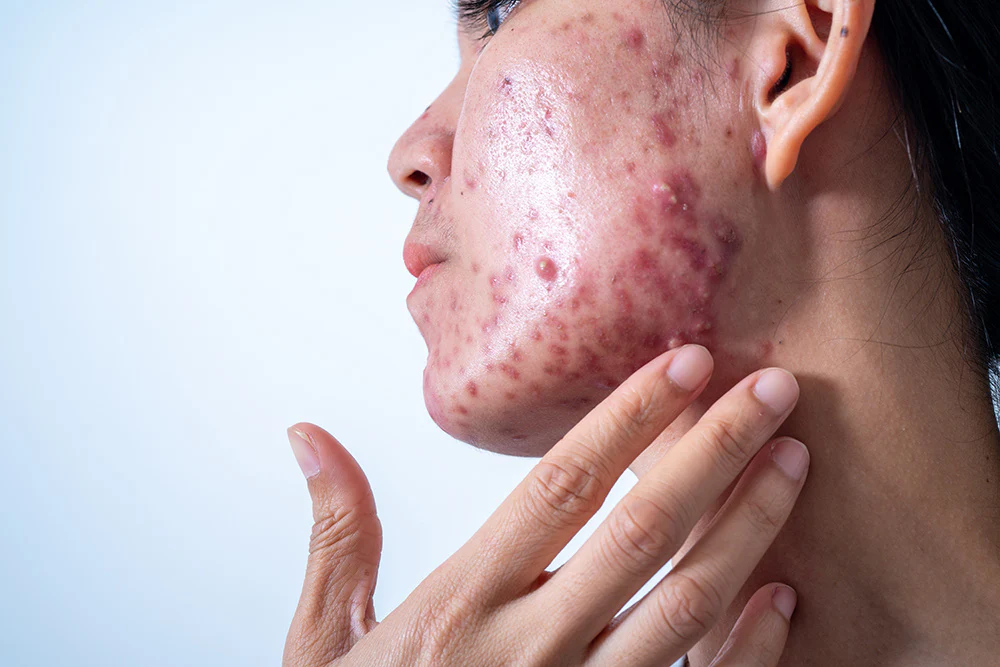
- The “U-Zone” Distribution: While adolescent acne often covers the forehead and T-zone, adult hormonal acne typically concentrates on the lower third of the face—the jawline, chin, and neck.
- Deep-Seated Cystic Lesions: These are not your average “pop-able” pimples. They are deep, painful, under-the-skin bumps (cysts or nodules) that rarely come to a head and feel tender to the touch.
- Cyclical Flare-ups: Symptoms often follow a predictable monthly pattern, worsening during the luteal phase (the week before a menstrual cycle) or during periods of high stress.
- Persistent Inflammation: Even after a breakout “heals,” it often leaves behind stubborn post-inflammatory hyperpigmentation (PIH) or erythema (PIE) that takes months to fade.
Types of Hormonal Acne
Hormonal breakouts manifest in various forms depending on the severity of the androgenic response:
- Cystic Acne: Large, pus-filled, and painful. These carry the highest risk of permanent scarring.
- Nodular Acne: Solid, hard lumps beneath the skin surface without a visible “head.”
- Papules and Pustules: Small red bumps or white-tipped lesions that indicate active surface inflammation.
- Comedonal Acne: While less common in hormonal cases, “closed comedones” (flesh-colored bumps) can act as the precursor to larger inflammatory breakouts.
Treatment: A Multidimensional Medical Approach
Treating hormonal acne requires more than just topical creams; it requires “re-tuning” the skin’s environment.
1. Advanced Topical Therapies
- Retinoids (Tretinoin/Adapalene): These accelerate cell turnover to prevent pores from clogging in the first place.
- Anti-Androgens: Topical Spironolactone is an emerging treatment that blocks testosterone receptors directly at the follicle site.
- Azelaic Acid: A powerhouse for hormonal acne as it kills bacteria while simultaneously fading the dark spots left behind by cysts.
2. Clinical Procedures at Grazia
For faster, more effective results, clinical intervention is often necessary:
- Chemical Peels: Salicylic and Glycolic acid peels exfoliate deep within the pore and reduce sebum production.
- Laser & Light Therapy: Specific wavelengths can target the P. acnes bacteria and shrink overactive sebaceous glands.
- Medical Extractions: Safely clearing non-inflammatory lesions to prevent them from turning into deep cysts.
3. Systemic Interventions
In moderate to severe cases, a dermatologist may prescribe:
- Oral Spironolactone: A medication that limits the amount of oil the skin produces by regulating androgen hormones.
- Oral Contraceptives: Specifically those FDA-approved for acne, which help stabilize hormonal fluctuations.
- Isotretinoin: Reserved for severe, scarring cystic acne that is resistant to other treatments.
Aftercare and Lifestyle Integration
The “healing” phase is just as important as the treatment phase to ensure the skin remains clear.
- Anti-Inflammatory Diet: High-glycemic foods (sugar, white bread) can spike insulin, which in turn spikes androgen production. Focus on a diet rich in Omega-3s and antioxidants.
- The “No-Pick” Policy: Attempting to squeeze a hormonal cyst pushes the infection deeper, leading to “atrophic” (pitted) scarring that requires expensive laser resurfacing later.
- Hydration Balance: Many acne treatments are drying. Use non-comedogenic, ceramide-based moisturizers to keep the skin barrier intact.
- Stress Management: Cortisol (the stress hormone) is a major trigger for oil production.
Traditional treatments for hormonal acne
Treatment for hormonal acne will aim to help reduce symptoms and prevent complications, such as acne scars.
Your treatment plan may include a combination of lifestyle changes, over-the-counter (OTC) medications, and medical treatments.
Topical retinoids
Topical retinoids may help treat mild to moderate hormonal acne. Some retinoids includeTrusted Source:
- tretinoin
- tazarotene (Tazorac)
- adapalene (Differin gel)
- trifarotene
Topical retinoids are available OTC at pharmacies in the form of creams, gels, and lotions. If OTC retinoids aren’t effective, a doctor may prescribe a stronger topical retinoid.
Other common topical medications for hormonal acne may include:
Oral contraceptives
Oral contraceptives can be used to help treat hormonal acne in people assigned female at birth.
The Food and Drug Administration has approved threeTrusted Source oral contraceptives for the treatment of acne. These include a combination of ethinyl estradiol and one of the following medications:
- drospirenone (Yaz)
- norgestimate
- norethindrone
Together, these ingredients target the hormones that can contribute to acne. This can be especially helpful during peaks in hormones, such as ovulation.
Oral contraceptives may not be an option for you if you have a history of blood clots, high blood pressure, or breast cancer. You also shouldn’t take these if you smoke.
Learn more about birth control for acne.
Conclusion
Hormonal acne is complex, but it is not a life sentence. By combining advanced dermatological science with lifestyle awareness, it is possible to achieve a calm, clear complexion. At Grazia Skin Clinics, we specialize in identifying the specific hormonal triggers for each patient and crafting a bespoke path to recovery. True skin health starts from within, and with the right medical partnership, your skin can reflect your inner balance once again.https://www.healthline.com/health/beauty-skin-care/hormonal-acne
Summary Checklist for Clear Skin
| Action Item | Why It Matters |
| Consult a Specialist | To determine if the cause is hormonal or lifestyle-based. |
| Switch to Medical-Grade | Over-the-counter products often lack the potency to reach deep cysts. |
| Track Your Cycle | Helps predict and prevent “flare-up” weeks. |
| Consistency is Key | Hormonal treatments typically take 8–12 weeks to show significant results. |