
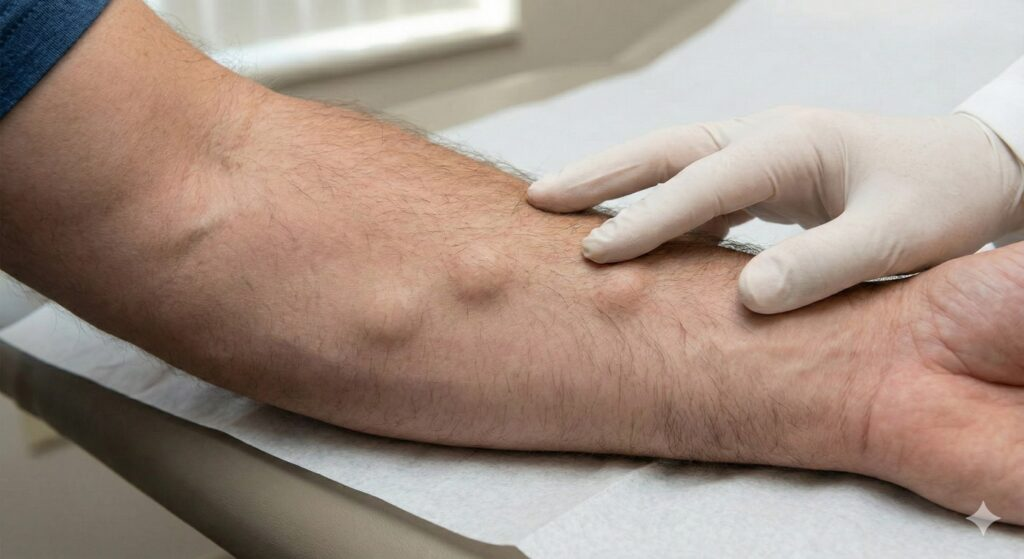
Lipoma: A Comprehensive Guide to Symptoms, Causes, and Treatment
At Grazia Skin Clinic, we believe that understanding your skin is the first step toward confidence and health. While discovering a new lump under your skin can be unsettling, most soft, moveable growths are lipomas—benign fatty tumors that are incredibly common and generally harmless.
This guide provides an in-depth look at everything you need to know about lipomas, from their biological origins to the advanced removal techniques we offer.
1. Introduction: What is a Lipoma?
A lipoma is a slow-growing, fatty lump that most often situated between your skin and the underlying muscle layer. They are classified as benign (non-cancerous) tumors of mesenchymal origin.
Key Characteristics:
- Texture: Doughy or soft to the touch.
- Mobility: They move easily with slight finger pressure.
- Size: Usually small (less than 2 inches), but they can grow larger.
- Pain: Generally painless, unless they compress nearby nerves or contain many blood vessels.
While they can develop at any age, they are most frequently detected between the ages of 40 and 60. At Grazia Skin Clinic, we emphasize that while lipomas aren’t dangerous, a professional diagnosis is essential to rule out rarer conditions like liposarcoma.
2. Common Symptoms
Lipomas can appear anywhere on the body where fat cells exist, but they are most prevalent on the shoulders, neck, chest, arms, and thighs.
- Soft, Rubbery Consistency: Unlike cysts (which can feel tense) or lymph nodes (which feel firm), lipomas have a distinct “give.”
- Slow Growth: They often stay the same size for years or grow very slowly.
- Subcutaneous Placement: They sit just under the skin rather than deep within organs.
- Pain Factors: If a lipoma is an angiolipoma (containing blood vessels), it may be tender or painful when pressed.
3. Causes and Risk Factors
The exact cause of lipomas remains a bit of a medical mystery, but several factors are known to play a role:
- Genetics: If your parents had lipomas, you are more likely to develop them. Conditions like Familial Multiple Lipomatosis run in families.
- Age: Prevalence peaks in middle age.
- Medical Conditions: Certain rare disorders increase the risk, including:
- Dercum’s Disease: Causes painful lipomas to grow.
- Gardner Syndrome: A genetic disorder involving colon polyps and various tumors.
- Madelung’s Disease: Mostly seen in men who consume excessive alcohol.
- Physical Trauma: Some evidence suggests that a significant impact on a specific area of the body may trigger the growth of a “post-traumatic lipoma.”
4. Types of Lipomas
Not all fatty lumps are the same. Microscopically, they vary based on the tissue they contain:
| Type | Description |
| Conventional | The most common form; contains white fat cells. |
| Angiolipoma | Contains a mixture of fat and a large amount of blood vessels; often painful. |
| Fibrolipoma | Fat tissue held together by fibrous connective tissue. |
| Hibernoma | Made of “brown fat” (the type that generates heat) rather than standard white fat. |
| Myelolipoma | A mixture of fat and tissues that produce white blood cells. |
| Spindle Cell | Fat cells that appear rod-shaped (spindle-like) under a microscope. |
5. Professional Treatment Options
At Grazia Skin Clinic, we specialize in several methods for removing lipomas, depending on their size and location.
Surgical Excision
This is the most common and effective method.
- The Process: A small incision is made after local anesthesia is applied. The lipoma is “popped out” or dissected away from the surrounding tissue.
- The Result: Since the entire capsule is removed, recurrence is rare.
Liposuction
For larger lipomas or those in cosmetically sensitive areas, liposuction can be used.
- The Process: A needle and a large syringe are used to vacuum out the fatty tissue.
- The Result: Smaller scars, though there is a slightly higher chance of the lipoma returning if small fragments of the capsule are left behind.
Steroid Injections
In some cases, steroids can be injected directly into the lump to shrink it. This doesn’t usually make the lipoma disappear entirely but can reduce its prominence.
6. Aftercare and Recovery
Proper aftercare ensures minimal scarring and prevents infection. After a procedure at Grazia Skin Clinic, we recommend:
- Keep it Dry: Keep the surgical site dry for the first 24–48 hours.
- Activity Levels: Avoid heavy lifting or strenuous exercise for 1–2 weeks if the lipoma was removed from a high-tension area (like the back or thigh).
- Wound Care: Apply prescribed antibiotic ointment and change bandages as directed.
- Monitoring: Watch for signs of infection, such as increased redness, warmth, or discharge.