The Ultimate Guide to Eczema: From Diagnosis to Advanced Recovery
1. Introduction: Understanding the Itch
Atopic Dermatitis, commonly known as Eczema, is more than just “dry skin.” It is a chronic inflammatory condition of the immune system that manifests on the skin’s barrier. For many, it is a lifelong journey of flare-ups and remissions. While there is no “cure” in the traditional sense, modern dermatology has advanced to a point where “clear skin” is a reachable goal for almost every patient.
The complexity of eczema lies in its variety. It affects infants, children, and adults differently, often overlapping with other “atopic” conditions like asthma and hay fever. Understanding the root cause—be it genetics, environmental triggers, or a compromised skin barrier—is the first step toward effective management.
2. Recognizing the Symptoms
Eczema symptoms are not uniform; they vary based on the type of eczema and the age of the patient. However, the “itch-scratch cycle” is the hallmark of the condition.
- Intense Pruritus (Itching): Often worse at night, leading to sleep deprivation.
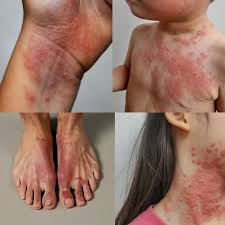
- Erythema (Redness): In lighter skin tones, this appears red; in darker skin tones, it may look brown, purple, or grey.
- Xerosis (Dry Skin): Chronic dryness that feels “tight” even after applying lotion.
- Lichenification: Thickened, leathery skin caused by chronic scratching.
- Exudation (Oozing): Small raised bumps that may leak fluid and crust over, often a sign of secondary infection.
- Papules: Small, raised bumps that can be extremely itchy.
3. The Major Types of Eczema
To treat eczema effectively, you must identify which “category” your skin falls into.
| Type | Characteristics | Primary Triggers |
| Atopic Dermatitis | The most common form; often starts in childhood. | Genetics, Hay fever, Asthma. |
| Contact Dermatitis | Skin reacts to a specific substance. | Detergents, nickel, latex, fragrances. |
| Dyshidrotic Eczema | Small, itchy blisters on hands and feet. | Stress, allergies, damp hands/feet. |
| Nummular Eczema | Coin-shaped, crusty sores. | Insect bites, dry winter air. |
| Seborrheic Dermatitis | Affects oily areas like the scalp and face. | Yeast (Malassezia), stress, hormones. |
| Stasis Dermatitis | Occurs due to poor circulation, usually in lower legs. | Varicose veins, aging. |
4. Comprehensive Treatment Pathways
Treatment is generally divided into three tiers: Maintenance, Flare-up Management, and Advanced Intervention.
Tier 1: Topical Therapies
- Corticosteroids: The frontline treatment to reduce inflammation. These range from mild (Hydrocortisone) to ultra-potent (Clobetasol).
- Calcineurin Inhibitors: Non-steroidal creams (like Tacrolimus) that are safer for sensitive areas like the eyelids and face.
- PDE4 Inhibitors: Newer non-steroidal options that block enzymes contributing to inflammation.
Tier 2: Phototherapy (Light Therapy)
For patients who don’t respond to creams, Narrowband UVB light therapy can be highly effective. It uses controlled UV light to suppress the overactive immune response in the skin.
Tier 3: Systemic and Biologic Medications
For severe cases, dermatologists may prescribe:
- Biologics (e.g., Dupilumab): Injectable proteins that target the specific “interleukins” causing the itch.
- JAK Inhibitors: The latest oral medications that block the signaling pathways of inflammation.
5. Essential Aftercare and Lifestyle Management
Healing eczema requires a 24/7 commitment to skin barrier repair.
- The “Soak and Seal” Method: Bathe in lukewarm water for 10 minutes, pat dry gently, and apply a thick emollient (ointment or cream) within 3 minutes to lock in moisture.
- Trigger Identification: Use fragrance-free soaps, avoid wool clothing, and maintain a dust-free environment.
- Wet Wrap Therapy: In severe cases, applying a damp bandage over topical medication can increase absorption and provide instant cooling relief.
- Dietary Awareness: While food isn’t the primary cause for everyone, some find relief by avoiding inflammatory triggers like dairy or gluten if a sensitivity is present.
6. Conclusion: A Future of Clear Skin
Eczema is a marathon, not a sprint. While the physical symptoms are visible, the emotional toll—anxiety, social withdrawal, and exhaustion—is equally significant. By combining clinical treatments with a rigorous “barrier-first” skincare routine, most individuals can achieve long-term remission.
If you are struggling with persistent flares, professional intervention is necessary to prevent permanent scarring and infections. Modern dermatology offers more hope today than ever before.
Dermatologist Note: Always consult with a certified skin specialist before starting high-potency steroid treatments to avoid side effects like skin thinning (atrophy).