
The Ultimate Guide to Corn Removal: Causes, Treatments, and Lasting Relief
1. Introduction: Understanding Foot Corns
Foot corns are more than just a minor cosmetic nuisance; for many, they are a source of chronic discomfort that affects mobility and quality of life. At Grazia Skin Hair Laser Clinic, we see patients daily who have attempted “bathroom surgery” or over-the-counter fixes, only to find the condition returning or worsening.
A corn (heloma) is a localized thickening of the skin produced by localized pressure or friction. They are part of the body’s natural defense mechanism—the skin thickens to protect the underlying tissues from being damaged. However, when this thickening becomes excessive, it forms a hard, conical “plug” that presses into the sensitive nerves of the dermis, causing sharp pain.
Corns vs. Calluses: What’s the Difference?
While often used interchangeably, they are distinct:
- Corns: Smaller, have a hard center (the nucleus), and are usually surrounded by inflamed skin. They typically develop on non-weight-bearing parts of the foot, like the tops or sides of toes.
- Calluses: Larger, flatter, and usually develop on the soles of the feet (especially under the heels or balls). They are rarely painful unless they crack.
2. Symptoms: How to Identify a Corn
Identifying a corn early can prevent the progression to a painful infection or ulceration. Look for the following signs:
- A Thick, Rough Area: A raised, hardened bump that feels distinct from the surrounding skin.
- The “Core”: A visible, translucent or hard center point.
- Tenderness or Pain: Sharp pain when direct pressure is applied to the area (often described as “walking on a stone”).
- Flaky, Dry, or Waxy Skin: The surface may appear yellowish or gray.
- Redness and Swelling: Inflammation in the tissue surrounding the hardened area.
3. Root Causes: Why Do Corns Develop?
Corns don’t appear without a reason. They are biological responses to mechanical stress.
- Ill-fitting Footwear: This is the #1 cause. High heels compress the toes, while shoes that are too tight or too loose cause constant friction.
- Walking Biomechanics: An abnormal gait or flat feet can distribute weight unevenly, putting “hot spots” of pressure on specific areas of the foot.
- Bone Deformities: Conditions like Hammertoes (where a toe curls downward) or Bunions (bony bumps at the base of the big toe) create unnatural contact points with shoes.
- Going Sockless: Wearing shoes without socks increases friction significantly.
- Activity Level: Athletes or people whose jobs require standing for long hours are at higher risk.
4. Professional Removal Procedures
At a professional clinic, the goal is not just to remove the skin, but to address the “root” of the problem.
Clinical Debridement (Paring)
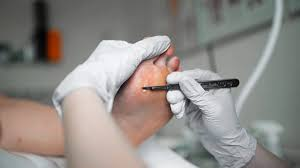
The most common professional treatment. A podiatrist or specialist uses a sterile surgical blade to gently shave away the dead, thickened skin.
- Pain Level: Minimal to none (the skin being cut is already dead).
- Result: Immediate pressure relief.
Salicylic Acid Treatments
Professional-grade chemical peels or concentrated salicylic acid may be used to soften the corn’s “plug” for easier removal.
Note: We strongly advise diabetics and those with poor circulation to avoid over-the-counter acid patches, as they can cause chemical burns and ulcers.
Laser Therapy
Modern clinics now utilize CO2 or Er:YAG lasers to precisely vaporize the corn tissue. Laser treatment is highly effective for deep-rooted corns and offers a sterile environment with faster healing times.
Surgical Correction
If a corn is caused by a protruding bone or a hammer toe, minor surgery may be required to realign the bone or remove a small piece of the bony prominence to prevent the corn from ever returning.
5. Aftercare and Prevention
The removal of a corn is only half the battle. To keep your feet smooth and pain-free, follow these steps:
- Moisturize Daily: Use a urea-based cream (10% to 20%) to keep the skin supple and prevent hardening.
- Proper Fitting Shoes: Ensure there is a thumb’s width of space between your longest toe and the end of the shoe. Shop for shoes in the evening when feet are slightly swollen.
- Use Padding: Apply non-medicated silicone toe sleeves or “donut” pads to redistribute pressure away from sensitive spots.
- Pumice Stone Maintenance: After a bath, gently rub a pumice stone over the area to prevent skin buildup. Never try to cut the corn yourself.
6. When to See a Specialist
You should book a consultation at Grazia Skin Hair Laser Clinic if:
- The corn is leaking fluid or pus (sign of infection).
- You have Diabetes, as foot injuries can lead to serious complications.
- The pain is preventing you from wearing normal shoes or exercising.
- The corn recurs despite changing your footwear.
Corns vs. Calluses: The Critical Distinctions
Understanding which one you have is the first step toward the right treatment:
| Feature | Foot Corns (Heloma) | Calluses (Tyloma) |
| Size | Small, circular, and well-defined. | Larger, spread out, and irregular. |
| Location | Tops/sides of toes, between toes. | Soles, heels, and balls of feet. |
| Core | Has a hard, central “nucleus” or plug. | No central core; uniform thickness. |
| Pain | Sharp, localized pain when pressed. | Usually a dull ache or painless. |
Export to Sheets
2. Detailed Symptoms and Classifications
Identifying the specific type of corn is essential for determining the procedure.
Hard Corns (Heloma Durum)
These are the most prevalent. They usually appear on the tops of the smaller toes or the outer side of the little toe. They have a firm, waxy appearance and a very distinct, hard center.
Soft Corns (Heloma Molle)
Commonly found in the “web spaces” between the fourth and fifth toes. Because moisture (sweat) gets trapped here, the corn stays soft and rubbery. They often appear white and can be extremely painful due to the constant rubbing of two toe bones together.
Seed Corns (Heloma Milliare)
These look like tiny grains of rice on the bottom of the foot. They are often associated with extremely dry skin (xerosis) rather than just pressure.
3. The Root Causes: Why Do They Keep Coming Back?
If you remove a corn but don’t address the cause, it will return within weeks. The primary triggers include:
- Biomechanical Imbalance: If you have high arches or flat feet, your weight isn’t distributed evenly. This creates “high-pressure zones” where corns flourish.
- The “Toe Box” Issue: Modern footwear often features a narrow toe box that squashes the toes together, causing the bones to rub against the shoe and each other.
- Digital Deformities: Hammertoes, mallet toes, and bone spurs (exostoses) create structural bumps that the skin tries to protect by forming a corn.
- Aging: As we age, the fatty padding on the bottom of our feet thins out (atrophy), leaving the bones with less natural cushioning.
4. Professional Procedures: How We Remove Corns
At a clinical level, we move beyond surface-level trimming to provide lasting relief.
Clinical Debridement (The Paring Method)
Using a sterile, single-use surgical scalpel, our specialists gently shave away the layers of dead skin. The goal is to reach the “nucleus” and remove it entirely.
- Is it painful? No. The tissue being removed is dead. Most patients feel an immediate “weight lifted” sensation.
Advanced Laser Corn Removal
At Grazia Skin Hair Laser Clinic, we utilize state-of-the-art CO2 (Carbon Dioxide) Lasers.
- The Process: The laser emits a concentrated beam of light that vaporizes the thickened keratin without damaging the healthy surrounding skin.
- The Advantage: The laser cauterizes the area as it works, meaning there is zero bleeding and a significantly lower risk of infection compared to traditional cutting. It is the gold standard for deep, recurring hard corns.
5. The “Dos and Don’ts” of Corn Care
To help our patients manage their foot health at home, we recommend following these strict guidelines:
| DO | DON’T |
| DO soak your feet in warm, soapy water for 10 minutes to soften the skin before applying urea cream. | DON’T use “medicated” corn plasters if you are diabetic; the acid can cause a non-healing ulcer. |
| DO use a pumice stone gently in a circular motion to maintain the area after professional removal. | DON’T attempt “bathroom surgery” with scissors, needles, or razor blades. This leads to deep infections. |
| DO buy shoes in the afternoon when your feet are at their largest size. | DON’T wear the same pair of shoes two days in a row; give them time to dry and retain their shape. |
| DO use silicone toe separators for soft corns to stop bones from rubbing. | DON’T ignore a corn that changes color (red/blue) or begins to throb. |
Export to Sheets
6. Aftercare and Long-term Prevention
Once the corn is professionally removed, your “recovery” is about habit-building:
- Urea Therapy: Apply a cream containing 20% Urea every night. Urea is a keratolytic, meaning it actively breaks down excess keratin before it can harden into a corn.
- Custom Orthotics: If your corns are caused by how you walk, a custom shoe insert can redistribute pressure and prevent the corn from ever forming again.
- Footwear Audit: Look inside your shoes. If the lining is torn or there’s a rough seam exactly where your corn was, it’s time to replace the shoes.
Conclusion: Walk Pain-Free Again
You don’t have to live with the “sharp-stone” pain of a foot corn. Professional intervention is quick, safe, and provides immediate results.
Ready to get rid of that painful corn for good? Would you like me to draft a patient consultation form you can use at the clinic, or perhaps a shorter version of this text specifically for an Instagram or Facebook post?